Showing posts with label CAT_histtech. Show all posts

Thursday, July 31, 2025

Ethnography of high-energy physics


Science proceeds through research communities whose participants share important and often distinctive features of thought and method. This is one of the key insights of the “historical turn” in the philosophy of science initiated in the 1970s (link, link), and it underlies much work within the interdisciplinary field of Science and Technology Studies. But what more specifically goes into the “denkkollectiv” (Ludwik Fleck), “research programme” (Imre Lakatos), or “disciplinary matrix” (Thomas Kuhn) of a specific scientific field? One way of gaining knowledge about those features of thinking and experimenting in specific research communities is through immersive study by ethnographers and micro-sociologists. Paul Rabinow offered an especially fruitful example of this kind of investigation in Making PCR (link). Rabinow was specifically interested in discovering the mental and material worlds of biotechnology researchers.

This book focuses on the emergence of biotechnology, circa 1980, as a distinctive configuration of scientific, technical, cultural, social, economic, political, and legal elements, each of which had its own separate trajectory over the preceding decades. It examines the “style of life” or form of “life regulation” fashioned by the young scientists who chose to work in this new industry rather than pursue promising careers in the university world…. In sum, it shows how a contingently assembled practice emerged, composed of distinctive subjects, the site in which they worked, and the object they invented. (Making PCR, 2)

And what about the most esoteric of contemporary scientific research, high-energy particle physics (link)? How does this extended network of researchers think and work as this community seeks out further features of fundamental physics? Peter Galison’s Image and Logic: A Material Culture of Microphysics is a brilliant, clear, and extensive exposition of the interface between theory and experiment in physics. Galison thinks of contemporary physics as an overlapping set of three kinds of activity: experimentation, instrumentation, and theorizing. In this book he looks at instrumentation and the machines of physical investigation as a realm that requires its own careful study — from a historical-sociological point of view as well as from an epistemic one.

These machines have a past. To walk through the laboratories of the twentieth century is to peruse an expanse of history in which physics has played many parts. Over here, film for atomic physics, X-ray film out of boxes destined for medicine; over there, a converted television camera rewired as part of a spark chamber. In this corner a piece of preparatory apparatus for a hydrogen bomb, in that a cannibalized bit of computer. Around you in the 1950s the structure of mutable, industrial-style laboratories introduced to physics in the wartime scramble to ready nuclear weapons and radar. Shaped by the exigencies of industry and war, but also shaping the practices of both, the machines of physics are part of a wider technological material culture—neither below it, nor above it. (xviii)

And Galison emphasizes that the realm of “the practice of physics” encompasses many forms of activity: institutions, social networks, extended working groups, peer-reviewed journals, and specialized forms of knowledge developed in industrial, military, and corporate spaces.

Even this penciled sketch is but a partial presentation of the multitude of worlds within physics; there were other worlds beyond. Left out are the different university and national groups participating in large experiments, not to speak of the theorists, phenomenologists, administrators, and industrialists; there are computer programmers simulating runs and figuring out how to acquire, store, and sort the data; there are postdocs running shifts. Somehow, out of it all, comes an argument. This picture of science fits badly into the narrowly construed rationality of the algorithmic, and equally badly into the image of an unreasoned struggle by opposing forces to divvy up the territory of knowledge. Physics as a whole is always in a state of incomplete coordination between extraordinarily diverse pieces of its culture: work, machines, evidence, and argument. That these messy pieces come together as much as they do reveals the presence, not of a constricted calculus of rationality, but of an expanded sense of reason. (xxii)

Moreover, Galison suggests that laboratory machines have “meaning”, in a fairly specific sense: they have been designed and adapted by intentional agents with specific explanatory goals in mind.

I will argue that laboratory machines can command our attention if they are understood as dense with meaning, not only laden with their direct functions, but also embodying strategies of demonstration, work relationships in the laboratory, and material and symbolic connections to the outside cultures in which these machines have roots. (2)

This point amounts to a denial of technological determinism — the idea that technologies (machines) have a specific and inherent logic of development. Against this view, Galison puts forward an “agentic” view of the group processes of instrumentation and experimentation. Individuals and teams make informed guesses about what kinds of probes and instruments will illuminate particular problems, and they design instruments to carry out those investigations. And we can also look at this as a “social embeddedness” conception of the physics laboratory: the physicist (theorist, experimenter, instrument designer) brings with him or her assumptions and mental frameworks drawn from the broader society in which they emerge.

Another important insight Galison offers has to do with the “logic of experimentation” itself. In the empiricist tradition there is the idea that experiments are the means through which observation enforces the constraints of evidence on theory. But Galison emphasizes throughout the book that the nature of “experiment” and “experimenter” has changed dramatically over the past two centuries — perhaps most radically in the past fifty years. “Big science” at CERN or the Fermi Laboratory necessarily involves the extended and collaborative work of thousands of experts and technicians; so who is the experimenter there? Rather, it is necessary to interpret and reinterpret the results of the data collected after high-energy collisions, and these data do not speak univocally for themselves. “It is amid these intimate bits of machines, data, and interpretations that the categories of experiment and experimenter are embodied: defined, dismantled, and reassembled” (7).

Galison offers a novel approach to the problem of “scientific incommensurability”. Introduced by Thomas Kuhn as “incommensurable paradigms” guiding related research communities, the idea has proven elusive. Galison approaches the problem from the point of view of small differences in language and vocabulary across closely related laboratory communities; he uses the anthropologist’s ideas of creoles and pidgins to capture the differences in meaning that he identifies (48). He writes:

Because the picture of physics sketched here is one of distinct but coordinated subcultures, the notion of an interlanguage is a useful decentered metaphor. In different forms the same kind of question arises; How should we think about the relation of theorists to theorists, of theorists to experimenters, of physicists to engineers, of chemists to physicists, of image instrument makers to logic instrument makers, and of the myriad of detector subgroups within a hybrid experiment one to the other? To homogenize these various groups artificially is to miss their distinct ways of going about their craft; to represent them as participating in isolated conceptual schemes “translating” back and forth is to shut our eyes to the productive, awkward, local coordination by which communities, machines, and knowledge get built. Consider three aspects of the interlanguage. (49)

Through these “interlanguages”, Galison suggests, the separate subcultures are able to communicate about the terms and procedures of their collaborations. And this suggests a practical response to W.V.O. Quine’s hypothetical worries about the “indeterminacy of translation” that he believes confronts all inter-linguistic encounters. This is an interesting and clearly formulated framework for seeking to understand the micro-level transactions across research communities in a large research project like the activities conducted at CERN or the Fermi Laboratory. Galison writes:

In many different ways this book is a working out of the following observation: pieces of devices, fragments of theories, and bits of language connect disparate groups of practitioners even when these practitioners disagree about their global significance. Experimenters like to call their extractive moves “cannibalizing” a device. (54)

There is a further point to emphasize in Galison’s approach: his consistent avoidance of the idea that “the experimental method” exists as a general and uniform exercise in empirical science. Against this idea, he emphasizes the contingency and capacity for change that historical studies of scientific episodes display — if we are alert to the fallacy of over-generalization. For this reason he explicitly denies that the episodes he considers in this book point to a common model of “experimentation” that might be incorporated into the philosophy of science or general statements about scientific method:

The chapters of this book, like the Medieval and Renaissance histories I have cited, are grounded in the local. But I resist the designation “case study” because I do not believe that there is a set of defining precepts that can be abstracted from these or other studies to “experiment in general” (or, for that matter, “theory in general” or “instruments in general”). (62)

Rather:

My question is not how different scientific communities pass like ships in the night. It is rather how, given the extraordinary diversity of the participants in physics—cryogenic engineers, radio chemists, algebraic topologists, prototype tinkerers, computer wizards, quantum field theorists—they speak to each other at all. And the picture (to the extent one simplifies and flattens it) is one of different areas changing over time with complex border zones that sometimes vanish, coalesce, and even burgeon into quasi-autonomous regions in their own right. (63)

This is history of science at its best: attuned to the contingency and heterogeneity of various scientific research practices, sensitive to the powerful influence of context (political, ideological, economic, military) on the conduct of science, and respectful as well of the quality and rigor of scientific work when it is done well.

Anthropologist Arpita Roy took up some of these questions through an extended period of field work at the European Organization for Nuclear Research (CERN) beginning in 2007, during which she interacted intellectually and practically with dozens of physicists as they performed their scientific work. The primary result of Roy’s ethnography is her recent book, Unfinished Nature: Particle Physics at CERN. The book is most interesting when the author reports and discusses specific conversations and topics that came up with a range of specialists during her field work (theorists, experimentalists, instrumentalists, engineers, computer analysts). These conversations offer the reader a basis for reaching his or her own conclusions about the micro-culture of the CERN technical environment. Also useful is her discussion of the explosion that occurred in the accelerator tunnel in September 2008 and that interrupted work for about fourteen months. And the stated goal of the book is valuable as well:

In that vein, it is not my intention to offer an exhaustive description of a science nor a prescription for a better science but to look closely at some of the presuppositions that serve in an interesting way to connect the technical procedures of a laboratory with wider principles of intellectual classification…. By presuppositions, I mean the class of beliefs that is collectively and unconsciously held by participants and of which they are unaware but that informs every aspect of scientific thinking and activity. (5)

The book is less convincing when the author turns to reflections drawn from Marx, post-modern thinkers, and other areas of philosophy. It is unclear, for example, how Marx’s conception of the division of labor is genuinely illuminating when it comes to understanding the workings of a large laboratory complex. There is a division of labor in this institution, of course; but Marx’s delineation seems to shed little light on this fact (any more than Durkheim’s discussion might have done).

Detailed inquiries into the concrete practices and mentalities found in “big science” laboratories and research institutes are important contributions to both the sociology of science and eventually to our understanding of the epistemic standing of physics. Realist philosophers of science are confident in one of the dualities criticized by Arpita Roy — the distinction between the knower and the properties of the physical world, or the distinction between subject and object — but the cognitive and social practices involved in the scientific enterprise are deeply interesting in their own right, and ethnographic studies of the ways in which scientists and engineers go about their work are deeply interesting. Ludwik Fleck attempted such studies in the 1930s, and this tradition of investigation of “science in the making” has proven to be profoundly insightful (link, link). And emphasis on extra-scientific features of “context”, including gender, race, business interests, and national security pressures is plainly relevant to the conduct of big science — the military-industrial complex described by President Eisenhower almost 75 years ago.

Thursday, August 25, 2022

Organizational factors and nuclear power plant safety

image: Peach Bottom Nuclear Plant

The Nuclear Regulatory Commission has responsibility for ensuring the safe operations of the nuclear power reactors in the United States, of which there are approximately 100. There are significant reasons to doubt whether its regulatory regime is up to the task. Part of the challenge is the technical issue of how to evaluate and measure the risks created by complex technology systems. Part is the fact that it seems inescapable that organizational and management factors play key roles in nuclear accidents -- factors the NRC is ill-prepared to evaluate. And the third component of the challenge is the fact that the nuclear industry is a formidable adversary when it comes to "intrusive" regulation of its activities. 

Thomas Wellock is the official historian of the NRC, and his work shows an admirable degree of independence from the "company line" that the NRC wishes to present to the public. Wellock's book, Safe Enough?: A History of Nuclear Power and Accident Risk, is the closest thing we have to a detailed analysis of the workings of the commission and its relationships to the industry that it regulates. A central focus in Safe Enough is the historical development of the key tool used by the NRC in assessing nuclear safety, the methodology of "probabilistic risk assessment" (PRA). This is a method for aggregating the risks associated with multiple devices and activities involved in a complex technology system, based on failure rates and estimates of harm associated with failure. 

This preoccupation with developing a single quantitative estimate of reactor safety reflects the engineering approach to technology failure. However, Charles Perrow, Diane Vaughan, Scott Sagan, and numerous other social scientists who have studied technology hazards and disasters have made clear that organizational and managerial failures almost always play a key role in the occurrence of a major accident such as Three Mile Island, Fukushima, or Bhopal. This is the thrust of Perrow's "normal accident" theory and Vaughan's "normalization of deviance" theory. And organizational effectiveness and organizational failures are difficult to measure and quantify. Crucially, these factors are difficult to incorporate into the methodology of probabilistic risk assessment. As a result, the NRC has almost no ability to oversee and enforce standards of safety culture and managerial effectiveness.

Wellock addresses this aspect of an incomplete regulatory system in "Social Scientists in an Adversarial Environment: The Nuclear Regulatory Commission and Organizational Factors Research" (link). The problem of assessing "human factors" has been an important element of the history of the NRC's efforts to regulate the powerful nuclear industry, and failure in this area has left the NRC handicapped in its ability to address pervasive ongoing organizational faults in the nuclear industry. Wellock's article provides a detailed history of efforts by the NRC to incorporate managerial assessment and human-factors analysis into its safety program -- to date, with very little success. And, ironically, the article demonstrates a key dysfunction in the organization and setting of the NRC itself; because of the adversarial relationship that exists with the nuclear industry, and the influence that the industry has with key legislators, the NRC is largely blocked from taking commonsense steps to include evaluation of safety culture and management competence into its regulatory regime.

Wellock makes it clear that both the NRC and the public have been aware of the importance of organizational dysfunctions in the management of nuclear plants since the Three Mile Island accident in 1979. However, the culture of the organization itself makes it difficult to address these dysfunctions. Wellock cites the experience of Valerie Barnes, a research psychologist on staff at the NRC, who championed the importance of focusing attention on organizational factors and safety culture. "She recalled her engineering colleagues did not understand that she was an industrial psychologist, not a therapist who saw patients. They dismissed her disciplinary methods and insights into human behavior and culture as 'fluffy,' unquantifiable, and of limited value in regulation compared to the hard quantification bent of engineering disciplines" (1395). 

The NRC took the position that organizational factors and safety culture could only properly be included in the regulatory regime if they could be measured, validated, and incorporated into the PRA methodology. The question of the quantifiability and statistical validity of human-factors research and safety-culture research turned out to be insuperable -- largely because these were the wrong standards for evaluating the findings of these areas of the social sciences. "In the new program [in the 1990s], the agency avoided direct evaluation of unquantifiable factors such as licensee safety culture" (1395). (It is worth noting that this presumption reflects a thoroughly positivistic and erroneous view of scientific knowledge; link, link. There are valid methods of sociological investigation that do not involve quantitative measurement.) 

After the Three Mile Island disaster, both the NRC and external experts on nuclear safety had a renewed interest in organizational effectiveness and safety culture. Analysis of the TMI disaster made organizational dysfunctions impossible to ignore. Studies by the Battelle Human Affairs Research Center were commissioned in 1982 (1397), to permit design of a regulatory regime that would evaluate management effectiveness. Here again, however, the demand for quantification and "correlations" blocked the creation of a regulatory standard for management effectiveness and safety culture. Moreover, the nuclear industry was able to resist efforts to create "intrusive" inspection regimes involving assessment of management practices. "In the mid-1980s, the NRC deferred to self-regulating initiatives under the leadership of the Institute for Nuclear Power Operations (INPO). This was not the first time the NRC leaned on INPO to avoid friction with industry" (1397). 

A serious event at the Davis-Besse plant in Ohio in 1983 focused attention on the importance of management, organizational dysfunction, and safety culture, and a National Academy of Sciences report in 1988 once again recommended that the NRC must give high priority to these factors -- quantifiable or not (Human Factors Research and Nuclear Safety; link).

The panel called on the NRC to prioritize research into organizational and management factors. “Management can make or break a plant,” Moray told the NRC’s Advisory Committee for Reactor Safeguards. Even more than the man-machine interface, he said, it was essential that the NRC identify what made for a positive organizational culture of reliability and safety and develop appropriate regulatory feedback mechanisms that would reduce accident risk. (1400)

These recommendations led  the NRC to commission an extensive research consultancy with a group of behavioral scientists at Brookhaven Laboratory. The goal of this research, once again, was to identify observable and measurable factors of organizations and safety culture that would permit quantification of the quality of both intangible features of nuclear plants -- and ultimately to permit incorporation of these factors into PRA models. 

 Investigators identified over 20 promising organizational factors under five broad categories of control systems, communications, culture, decision making, and personnel systems. Brookhaven concluded the best measurement methodologies included research surveys, behavioral checklists, structured interview protocols, and behavioral-anchored rating scales. (1401)

However, this research foundered on three problems: the cost of evaluating a nuclear operator on this basis; the "intrusiveness" of the methods needed to evaluate these organizational systems, and the intransigent and adversarial opposition of the operators of nuclear plants against these kinds of assessment. It also emerged that it was difficult to establish correlations between the organizational factors identified and the safety performance of a range of plants. NRC backed down from its effort to directly assess organizational effectiveness and safety culture, and instead opted for a new "Reactor Oversight Process" (ROP) that made use only of quantitative factors associated with safety performance (1403).

A second and more serious incident at the Davis-Besse nuclear plant in 2002 resulted in a near-miss loss-of-coolant accident (link), and investigation by NRC and GAO compelled the NRC to once again bring safety culture back into the regulatory agenda. Executives, managers, operators, and inspectors were all found to have behaved in ways that greatly increased the risk of a highly damaging LOCA accident at Davis-Besse. The NRC imposed more extensive organizational and managerial requirements on the operators of the Davis-Besse plant, but these protocols were not extended to other plants.

It is evident from Wellock's 2021 survey of the NRC history of human-factors research and organizational research that the commission is currently incapable of taking seriously the risks to reactor safety created by the kinds of organizational failures documented by Charles Perrow, Diane Vaughan, Andrew Hopkins, Scott Sagan, and many others. NRC has shown that it is aware of these social-science studies of technology system safety. But its intellectual commitment to a purely quantitative methodology for risk assessment, combined with the persistent ability of the nuclear operators to prevent forms of "intrusive" evaluation that they don't like, leads to a system in which major disasters remain a distinct possibility. And this is very bad news for anyone who lives within a hundred miles of a nuclear power plant.


Tuesday, April 20, 2021

Technology and culture in antiquity

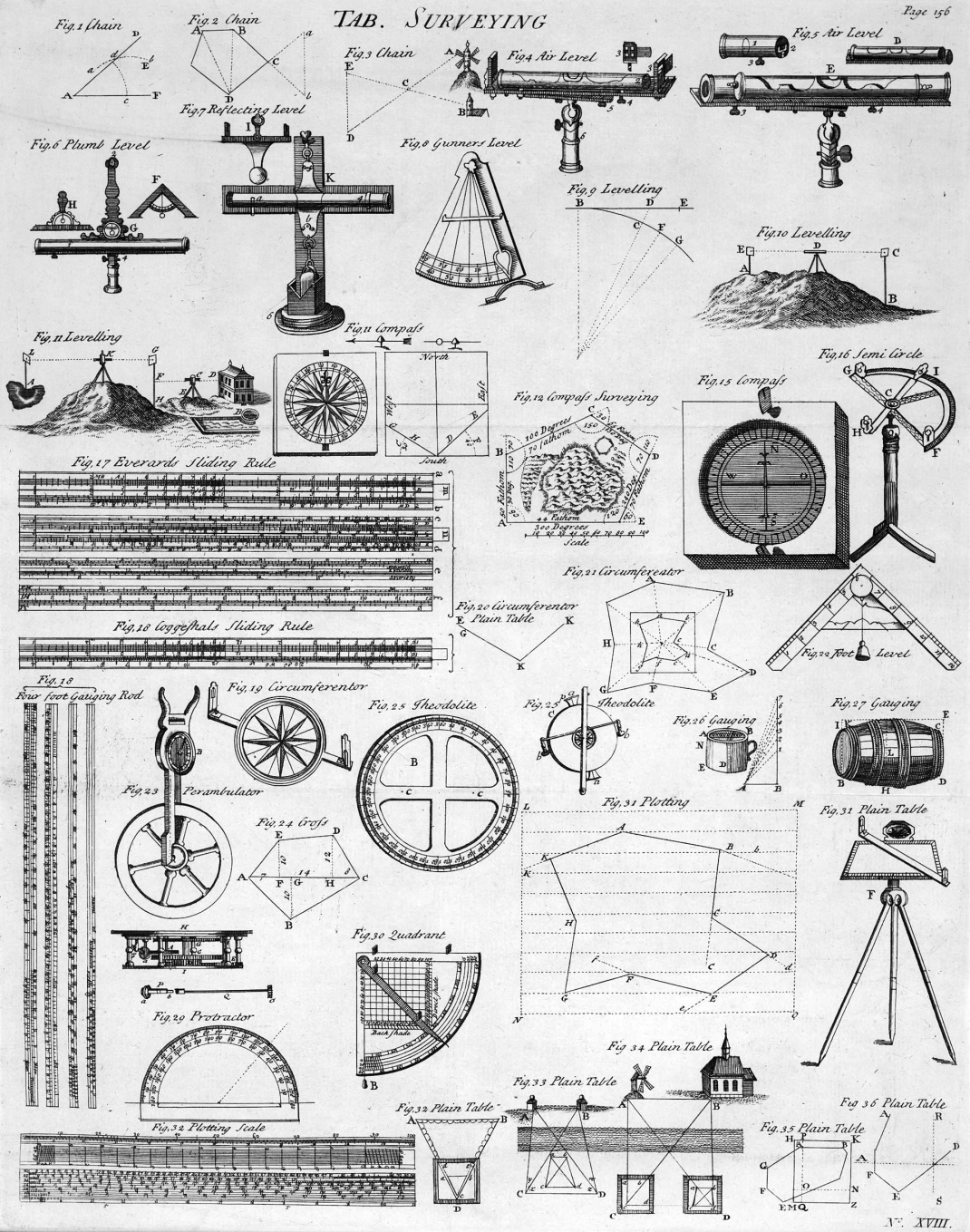
image: survey instruments, 1728

The history of technology was sometimes approached as a self-contained field of study. A more fruitful approach in the past thirty years has involved a broader perspective, placing technology change within a broader context of social change and cultural values. A good example is Lynn White's Medieval Technology and Social Change, where he places historical analysis of the plough and the stirrup within the social and political arrangements of late antiquity, and the emergence of new systems of military organization in the medieval period. A key insight has emerged that complicates the picture further: cultural and social arrangements influence the direction of change of technologies in use, but further, those cultural and social facts and practices are themselves affected by the emergence and adoption of new technologies. So technology and technology change are interwoven with social and cultural history, all the way down. (Here is an earlier post on the relationship between technology and culture; link.)

Serafina Cuomo's Technology and Culture in Greek and Roman Antiquity (2007) provides this kind of orientation to the nature and role of technology in antiquity. Her central goal is to place the several ideas of "technology" that can be found in Greek and Roman letters and artifacts into a semiotic place: what did the Greeks think about machines? How did they define and evaluate "technicians"? What is the relation between an ability to build and use artifacts and the possession of theoretical and mathematical knowledge? In what ways was techne a morally laden concept? Cuomo's general view is a radical one: we cannot treat the history of ancient technology without first and fundamentally addressing these questions of meaning and value.

She also pinpoints an important idea about the nature of an artifact or machine and the attitudes and representations that the users and observers brought to it. The definition of the technology itself is culturally specific, and we should not imagine that there is a universal "meaning" associated with a catapult or a medical treatment. The history of military technology, for example, cannot be correctly understood without investigating the "Greek way of war" and the valuations that Greek elites and philosophers brought to their understanding of the practices of war. 

Cuomo is especially critical of the idea that the history of technology is about the progress of a set of tools or machines, proceeding from invention through refinement to final form. On that line of interpretation, machines become more productive and useful through innovation; technological change is progressive; and the aim of the history of technology is to identify moments of invention and pathways of diffusion. Against these views -- which she fundamentally rejects -- she offers what she describes as the "scatter" theory of technology. (She sometimes uses the idea of a Creole technology to describe a cluster of innovations that occurred in a single locale but did not lead to broader diffusion. This idea is evidently borrowed from David Edgerton, The Shock of the Old: Technology and Global History since 1900.) Here is her description of the "scatter" model of technological change:

The term 'scatter' model refers both to the fact that there was a variety of 'older' and 'newer' catapults, or more generally siege engines, being employed at the same time, and to the fact that these technologies were geographically scattered. I imagine a situation where we have a number of points or clusters of technology with varying accompanying circumstances -- so with, for instance, a greater concentration of financial resources, some with a smaller number of available experts, some with easy access to some materials, some not in a position to take their own decisions when it came to war policy. A linear model would seek a way to connect the dots, as it were, which can only be done ... by making a number of problematic assumptions, whereas a scatter model may choose to accept the fact that the evidence is scattered and insufficient, and leave the dots unconnected. (56)

And she draws an interesting analogy with Darwin's observations of variation of finch species across the Galapagos islands: 

Darwin's avian populations developed in very different ways -- adapting to the individual environment of their island or part of island. Similarly for catapults: no matter how catapults got to a certain place ... changes were introduced at the local level, or not, in different ways and depending on different circumstances, so that at any given time we find catapults that seem to belong to different phases of development cohabiting. (56)

What is a little disappointing about this book is the lack of attention it provides to the details of the various technologies that are mentioned. It is a very "meta" book -- it is about "thinking about technology" rather than about the technologies themselves. Chapter 4 concerns itself with "boundary disputes in the Roman Empire". Land surveying is plainly key to this topic, and one would like to know in detail how geometry (a field of mathematics that was well understood in the ancient world) was applied to the gnarly realities of delineating plots of land. What tools were available for measuring distances and elevations? Cuomo makes it clear that "surveying" took place in the Roman world (103); but how was it done? Some of the tools depicted in the 18th-century diagram above are based on simple Euclidean principles, and it is natural to ask whether some of these instruments were available to Roman engineers and surveyors. Cuomo does not tell us. Rather than addressing these technical questions, Cuomo focuses instead on the question of dispute resolution. Her summary is distinctly uninformative:

In sum, the knowledge of the land-surveyors when it came to dealing with disputes, was characterized epistemically as a reading of signs, supported by mathematical knowledge, and in terms of practice as a complex negotiation between old and new, pre-Roman and Roman, natural and artificial, general rule and individual case. (113) 

For a historian who argues that we cannot separate "history of technology" from history more generally, she gives remarkably little attention to the technologies themselves. She is more interested in how people of the time, both elite and non-elite, conceived of "machines" and "artifacts", and the practical skills of the technical experts, than she is in the nuts and bolts of how the machines worked. The most detailed discussion offered in the book centers on several varieties of catapult; but even here, the technical details about how these variants worked are not provided. Lynn White's writings about medieval technology in Medieval Technology and Social Change get this balance much better, in my view. For example, White permits the reader to form a fairly clear understanding of the ecological, material, and social circumstances within which the heavy plough was adopted. 

The third advantage of the heavy plough derived from the first two: without such a plough it was difficult to exploit the dense, rich, alluvial bottom lands which, if properly handled, would give the peasant far better crops than he could get from the light soils of the uplands. It was believed, for example, that the Anglo-Saxons had brought the heavy Germanic plough to Celtic Britain in the fifth century; thanks to it, the forests began to be cleared from the heavy soils, and the square, so-called 'Celtic' fields, which had long been cultivated on the uplands with the scratch-plough, were abandoned, and generally remain deserted today.... The saving of peasant labour, then, together with the improvement of field drainage and the opening up of the most fertile soils, all of which were made possible by the heavy plough, combined to expand production and make possible that accumulation of surplus food which is the presupposition of population growth, specialization of function, urbanization, and the growth of leisure. (43-44)

This is perhaps an illustration of the "progress of technology" mindset that Cuomo criticizes; but in the context of medieval social and political life and in the circumstances of the ecologies of north and west Europe, White's account makes eminent good sense. Likewise, the essays on agriculture and metalworking in John Peter Oleson's Oxford Handbook of Engineering and Technology in the Classical World provide a clear understanding of the craft and technique involved in cultivation and land preparation, in the first instance, and refining and shaping of metal objects, in the second. Research in the history of technology requires at least this level of technical detail for it to be genuinely insightful.

Cuomo's emphasis on discovering the mentality and conceptual geography through which the peoples of ancient Greece and Rome thought about technology, craft, and machines is certainly important and valuable, and her discussion of classical texts and inscriptions is vastly learned. But this does not supplant the need to look carefully at the details of the technologies themselves.


Tuesday, April 13, 2021

Technology in the ancient world: time


We don't think of the ancient world as being one that was rich in technological innovation or progress. And yet in a number of areas, there were very significant developments in technology -- in ships, mining, fortification, siege engines, road-building, and bridges and aqueducts, for example. And there is the intriguing example of the Antikythera mechanism (link), dating from the first century BCE and lacking a clear technological context, but establishing firmly the availability of advanced metal-working techniques and complex geared mechanisms. (Two fascinating videos are linked on the earlier blogpost on the Antikythera mechanism.) 

John Peter Oleson's The Oxford Handbook of Engineering and Technology in the Classical World provides an extensive survey of the current state of knowledge about the topic, drawing upon the work of dozens of experts in classical scholarship. Here is the table of contents of the volume, from which the reader can get a very good idea of the topics and technologies considered:

Part I Sources  

1. Ancient Written Sources for Engineering and Technology, Serafina Cuomo  2. Representations of Technical Processes, Roger Ulrich  3. Historiography and Theoretical Approaches, Kevin Greene  

Part II Primary, Extractive Technologies  

4. Mining and Metallurgy, Paul T. Craddock  5. Quarrying and Stoneworking, J. Clayton Fant  6. Sources of Energy and Exploitation of Power, Orjan Wikander  7. Greek and Roman Agriculture, Evi Margaritis and Martin K. Jones  8. Animal Husbandry, Hunting, Fishing, and Fish Production, Geoffrey Kron 

Part III Engineering and Complex Machines  

9. Greek Engineering and Construction, Fredrick A. Cooper  10. Roman Engineering and Construction, Lynne Lancaster  11. Hydraulic Engineering and Water Supply, Andrew I. Wilson  12. Tunnels and Canals, Klaus Grewe  13. Machines in Greek and Roman Technology, Andrew I. Wilson  

Part IV Secondary Processes and Manufacturing  

14. Food Processing and Preparation, Robert I. Curtis  15. Large-Scale Manufacturing, Standardization, and Trade, Andrew I. Wilson  16. Metalworking and Tools, Carol Mattusch  17. Woodworking, Roger B. Ulrich  18. Textile Production, John P. Wild  19. Tanning and Leather, Carol van Driel-Murray  20. Ceramic Production, Mark Jackson and Kevin Greene  21. Glass Production, E. Marianne Stern 

Part V Technologies of Movement and Transport  

22. Land Transport, Part 1: Roads and Bridges, Lorenzo Quilici  23. Land Transport, Part 2: Riding, Harnesses, and Vehicles, Georges Raepsaet  24. Sea Transport, Part 1: Ships and Navigation, Sean McGrail  25. Sea Transport, Part 2: Harbors, David J. Blackman  

Part VI Technologies of Death  

26. Greek Warfare and Fortification, Philip de Souza  27. Roman Warfare and Fortification, Gwyn Davies  

Part VII Technologies of the Mind  

28. Information Technologies: Writing, Book Production, and the Role of Literacy, Willy Clarysse and Katelijn Vandorpe  29. Timekeeping, Robert Hannah  30. Technologies of Calculation, Part 1: Weights and Measures (Charlotte Wikander), Part 2: Coinage (Andrew Meadows), Part 3: Practical Mathematics (Karin Tybjerg) 31. Gadgets and Scientific Instruments, Orjan Wikander  32. Inventors, Invention, and Attitudes toward Innovation, Kevin Greene

Part VIII Ancient Technologies in the Modern World  

33. Expanding Ethnoarchaeology: Historical Evidence  and Model-Building in the Study of Technological Change, Michael B. Schiffer  

Many of the technologies described here are important and interesting, but familiar: ships, mines, fortifications, and other common interactions with the natural world. The most surprising technology innovations are described in Part VII, "Technologies of the Mind", and here there is more information about "high technology" in the ancient world. Orjan Wikander describes "gadgets and instruments" in chapter 31, which is a topic that sheds more light on advanced technical and scientific innovation -- and therefore provides some intellectual background for the design and fabrication of the Antikythera mechanism. What is most eye-opening about the details of the Antikythera mechanism is the intricate design of the gearing system that it embodied and the advanced metal-working techniques that it presupposed for fabrication (cutting precision gear wheels and most puzzling, cutting concentric tubes to convey motion from one gear assembly to an output ring). Wikander makes it clear that the principle of geared machines was familiar in the Hellenistic world (for advanced mathematicians and philosophers, at least). Field and Wright report on a Byzantine sundial calendar geared device dating from about 500 AD, whose gears are very similar to those used in the Antikythera device; link. They take this as evidence of an ongoing engineering tradition in the Greek world of fabrication of geared devices. (Notably, the sundial calendar is substantially less complex than the Antikythera mechanism, implying a loss of technological knowledge over the intervening 500 years.) 

But there is an interesting complication about these high-tech astronomical devices for the history of technology: these devices were advanced and sophisticated, but they appear to have had little practical utility. It appears to be widely agreed, for example, that the Antikythera device had no use as a navigational instrument; instead, it appears to be an entertaining demonstration of astronomical knowledge for an elite audience. A more useful geared instrument, apparently, was the "hodometer", a wheeled and geared device that could be pulled along a route and used to measure distance. But this is an important guidepost in the study of the history of technology: the innovation and development of the "gadget" itself does not ensure its proliferation and widespread adoption. It needs to find a need within ambient society to which the gadget can be adapted in a useful way.

An interesting challenge of measurement in the ancient world was time. Robert Hannah's chapter on "Timekeeping" provides a very interesting account of shifts in both the conception of time and the means that were available or developed to measure its passage. It is evident that it is not possible to engage in the science of mechanics without a way of measuring equal intervals of time -- key variables like velocity, acceleration, inertia all require an account of distance covered per unit of time. Most fundamentally, it isn't possible to form the concept of velocity unless one has a fairly definite conception of units of time. "Fast" and "slow" are imaginable; but 4 m/s is not. 

A little bit of reflection will show that there are at least two different problems encompassed under "timekeeping". First, we may have reasons for wanting to know "what is the time of day at the moment?", by which we mean, most fundamentally, how long past sunrise (or before sunset) is it currently? And how long until dinner? In this context it is very interesting (and eyebrow-raising) to learn of "unequal hours" involved in Greek timekeeping:

Sundials helped inculcate into society the concept of the seasonal, or unequal, hour. For most purposes in antiquity, such hours were the norm. From Egypt came the notion that each day or night could be divided into 12 hours from sunrise to sunset, and another 12 from sunset to sunrise (Parker 1974: 53; Quirke 2001: 42). Since daytime and nighttime change in length with the seasons, the length of each hour therefore changed also according to the season. Only at the spring and autumn equinoxes were the hours equal through the whole day. (p. 749)

So a person's pulse (beats per sixtieth of an hour) will be different, depending on whether it is measured in daytime or nighttime. Suppose the individual's real pulse rate at equinox is 70 beats per sixtieth of an hour and it never changes. When measured on December 22 by counting beats for an hour and dividing by 60, his/her pulse will be 54 bpm; the same measurement on June 22 results in a pulse of 86 bpm. Further, length of day is influenced by latitude as well as season; so the same individual would have a different pulse rate in Miami than in Helsinki, on the same day. Measuring pulse by such a system is useless as a tool for assessing health status. And how about cooking -- what is the result of a variable hour for a 4-minute soft-boiled egg? 

The harder challenge of time measurement is the problem of measuring "duration of time" -- how many minutes it takes to walk from the agora to the Acropolis in Athens, how long it takes the arrow to fly from the archer to the target, how long the egg has been boiling. The problem of time-telling can be handled reasonably well by use of a sundial (during daylight hours) and by the position and elevation of the stars by night, but a sundial is not a practical instrument for measuring duration.

What is needed for measuring duration is an absolute measure of "equal interval of time" that can be used to measure duration -- ticks of a clock, swings of a pendulum of a certain length, vibration of a cesium atom, movement of a violin string tuned to E, movement of the fork of a tuning fork tuned to A. More exactly, what is needed is a process that occurs in the same period of time every time it is invoked; and a way of counting the number of times the event has occurred during the process to be measured. Each of the processes mentioned here identifies a discrete event that always takes the same amount of time from beginning to end. The difficult challenge is an automatic way of counting events. Mechanical clocks "count" events by advancing a geared mechanism, moving pointers on a dial. 

The water clock (clepsydra) and sand clock both served to measure duration through the idea that the flow of a liquid or viscous substance through a constrained opening takes a regular amount of time. So a bucket with a hole in the bottom was used to measure the period in which legal arguments needed to be made in Athenian proceedings (752).

Here is a novel clock mechanism that could have been used. Suppose we construct a 6.21013-meter pendulum. It has a period of 5.0 seconds. This solves the first part of the problem: an event that always takes the same amount of time. But how to count events in order to measure extended periods of time? Suppose we design a simple device in which a small bucket with volume of 10 cm^3 is fitted to a lever and is triggered by a tap of the pendulum. It empties into a calibrated glass vessel and is refilled automatically in the next several seconds. After the first cycle the calibrated vessel contains 10 cm^3; after 50 cycles the vessel contains 500 cm^3 of water and 250 seconds have elapsed. After 17,280 cycles the calibrated vessel contains 172,800 cm^3 of water (172.8 liters), and 24 hours have elapsed. The calibration of the vessel permits the user to measure the amount of time (number of swings of the pendulum) that have occurred since beginning the process, by measuring the volume of the water. A large vessel (200 liters) will permit measurement of periods extending over a full 24 hour period; a narrow vessel can be calibrated to permit precise measurement of short intervals (5 minutes). The clock will be precise to the range of 5 seconds -- perfectly sufficient for boiling 4-minute eggs. And the precision of the timepiece can be increased by shortening the pendulum; a .5 meter pendulum has a period of 1.42 seconds.

(In this example the clock was initiated at midnight, and the level of the water indicates that the time is now 10:00 am.)

(Who can direct me to the Agora patent office? All royalties will be directed to the defense fund established on behalf of Professor Socrates.)

Once we have a system for measuring intervals of time, it is possible to define and measure other important physical quantities: velocity, acceleration, the period of a pendulum, the frequency of a vibrating string, a mammal's pulse. So measurement of mid-range intervals of time is crucial to the development of physics and mechanics as well as other areas of science -- as is evident from the Renaissance scientists such as Galileo. Conversely, without such a system of time-interval measurement, many important physical laws cannot be discovered. Ancient Greek and Roman scientists had reasonably effective instruments for measuring distance, and only very limited instruments for measure elapsed time. Time on the scale of a month or a year could be measured by observation of the movements of the moon and the planets; but time on the scale of seconds and minutes could not be measured by these means.

(Wikander is best known for his research on water technologies, including especially water mills. Here is an interesting page outlining changing knowledge over the past several decades on the extent of use of water mills during the classical period (link).)

Saturday, March 20, 2021

The Antikythera mechanism


When we think about scientific and technological knowledge in the ancient world, one generally thinks of philosophy and a little bit of pre-scientific musing about the nature of reality. Water? Fire? Flux? The ancient Greeks had knowledge of mathematics and geometry, of course, and a certain level of descriptive astronomy. But nothing really surprising; their scientific and mathematical achievements were limited. Or so it seems. But take a look at this description of the Antikythera mechanism (link), the scientific paper by a research team at University College London (link), and the associated Vimeo video (link), and you'll feel a jolt of paradigm shift about your assumptions about science and technology in the ancient world. This machine, dating from the second century BCE and discovered by sponge divers in the Mediterranean in 1901, was a corroded and incomplete group of fragments (one-third of the complete mechanism), and astonishingly enough, its workings have been decyphered and reconstructed. It is a geared device permitting the modeling and prediction of the motions of the five known planets, the moon, and the sun. Given that it represented the planetary bodies from the perspective of earth (geocentric model), the motions of the planets were complex and seemingly a bit chaotic. And the device itself is amazingly complex, embodying a layered set of gears with tooth counts permitting representation of the movements of the celestial objects. It was a complex and accurate analog computing device -- from a civilization that flourished 2,200 years ago.

credit: Lin and Yan, Decoding the Mechanisms of Antikythera Astronomical Device (Springer 2016, p. 56)

The journey of research that has permitted decyphering the machine is remarkable enough. (The video tells much of that story.) But even more eye-opening is the completely novel insight the reconstruction offers into Greek astronomical mathematics, engineering sophistication, and (as-yet unknown) fabrication capabilities. Metallurgy, gearing, delicate assembly, remarkable design -- the device is an amazing achievement demonstrating a background of advanced mathematical and technical expertise, and yet one that does not seem to have clear antecedents in the history of Greek science and engineering. So the discovery and reconstruction of the Antikythera mechanism seems roughly as surprising as it would be to find evidence of a network of electrical communication devices in an excavation of a medieval Frankish village: entirely at odds with our current understanding of the levels of scientific, technical, and engineering knowledge available in the time period.


The device cannot have been the result of a single "genius" inventor (e.g. Archimedes); its design and fabrication plainly required an infrastructure. And yet there are no other known artifacts from the ancient Greek Hellenic world with this level of sophistication. Parmenides comes into the mathematics of the device, and the mathematics of prime factors is crucial for the movements of the gears. A related device, the astrolabe, was invented and fabricated in the ancient Greek world in the second century BCE, which embodied a similar and fairly precise knowledge of planetary movements, but is orders of magnitude less complex. 

There is a great deal of useful background information on the device in Lin and Yan, Decoding the Mechanisms of Antikythera Astronomical Device (Springer, 2016). They summarize the possible history of this device in these terms:

It is confident that the device was not made by Archimedes, but might come from Syracuse in Sicily, the Corinthian colony where Archimedes had devised a planetarium in the third-century BC. Furthermore, it is speculative that the craftsmanship for making Antikythera device might be a heritage of manufacturing technique that originated with Archimedes in Syracuse. However, this attractive idea is waiting for proving. (57)

Lin and Yan also quote two passages from Cicero (d. 43 BCE) which appear to describe a mechanical device with similar functionality. The device described by Cicero is not the same design, however, because the text appears to make clear that the device is spherical in shape. Cicero lived roughly a century after the presumed date of the Antikythera mechanism invention.

Philus: ... Listening one day to the recital of a similar prodigy, in the house of Marcellus, who had been his colleague in the consulship; he asked to see a celestial globe, which Marcellus’s grandfather had saved after the capture of Syracuse, from this magnificent and opulent city, without bringing home any other memorial of so great a victory. I had often heard this celestial globe or sphere mentioned on account of the great fame of Archimedes. Its appearance, however, did not seem to me particularly striking. There is another, more elegant in form, and more generally known, moulded by the same Archimedes, and deposited by the same Marcellus, in the Temple of Virtue at Rome. But as soon as Gallus had began to explain, by his sublime science, the composition of this machine, I felt that the Sicilian geometrician must have possessed a genius superior to any thing we usually conceive to belong to our nature. Gallus assured us, that the solid and compact globe, was a very ancient invention, and that the first model of it had been presented by Thales of Miletus. That afterwards Eudoxus of Cnidus, a disciple of Plato, had traced on its surface the stars that appear in the sky, and that many years subsequent, borrowing from Eudoxus this beautiful design and representation, Aratus had illustrated them in his verses, not by any science of astronomy, but the ornament of poetic description. He added, that the figure of the sphere, which displayed the motions of the Sun and Moon, and the five planets, or wandering stars, could not be represented by the primitive solid globe. And that in this, the invention of Archimedes was admirable, because he had calculated how a single revolution should maintain unequal and diversified progressions in dissimilar motions. In fact, when Gallus moved this sphere or planetarium, we observed the Moon distanced the Sun as many degrees by a turn of the wheel in the machine, as she does in so many days in the heavens. From whence it resulted, that the progress of the Sun was marked as in the heavens, and that the Moon touched the point where she is obscured by the earth’s shadow at the instant the Sun appears above the horizon. (Cicero, De republica)

It is not easy to find detailed histories of science and technology for the ancient world. (Where is Needham when we need him?) What appears to be the most important book available on the history of engineering in the ancient Greek world is J. G. Handels, Engineering in the Ancient World, Revised Edition. Here are the topics contained in the revised edition from 2002:

  • Power and energy sources
  • Water supplies and engineering
  • Water pumps
  • Cranes and hoists
  • Catapults
  • Ships and sea transport
  • Land transport
  • Progress of theoretical knowledge
There is no mention in this book of small gauge gearing, metallurgy, or clocks. The astrolab is not mentioned in the book either. Though gears and gear boxes appear in the index, these references appear to have to do with crude largescale applications in cranes or catapults rather than the fine small-gauge gearing required for clockwork or devices like the Antikythera mechanism.

The fascinating reconstruction of the Antikythera mechanism seems to have important implications for the telling of ancient history and philosophy: it would appear unavoidable that there were forms of knowledge and technique in the ancient Hellenic world that permitted the design and fabrication of remarkably complex and sophisticated mechanisms; and the mechanism itself reflected a sophisticated mathematical understanding of the movements of the planets. Science, astronomy, metallurgy, engineering, and techniques of metal working and fabrication appear to have been substantially more advanced than currently believed. And this in turn underlines a point that great historians have probably always understood: that the past is more complicated, more multi-faceted, and more surprising than we currently know.

(Here is a model of the mechanism created in 2005 by Michael Wright; link. And here is a very interesting lecture by Jo Marchant at Darwin College, Cambridge, on the same version of the mechanism (link). Note that the most recent model differs significantly from the 2005 model in its use of moving rings rather than pointers on the front face.)


Saturday, May 23, 2020

Defining the philosophy of technology


The philosophy of technology ought to be an important field within contemporary philosophy, given the centrality of technology in our lives. And yet there is not much of a consensus among philosophers about what the subject of the philosophy of technology actually is. Are we most perplexed by the ethical issues raised by new technological possibilities -- genetic engineering, face recognition, massive databases and straightforward tools for extracting personal information from them? Should we rather ask about the risks created by new technologies -- the risks of technology catastrophe, of unintended health effects, or of further intensification of environmental harms on the planet we inhabit? Should we give special attention to issues of "technology justice" and the inequalities among people that technologies often facilitate, and the forms of power that technology enables for some groups over others? Should we direct our attention to the "existential" issues raised by technology -- the ways that immersion in a technologically intensive world have influenced our development as persons, as intentional and meaning-creating individuals? Are there issues of epistemology, rationality, and creativity that are raised by technology within a social and scientific setting? Should we use this field of philosophy to examine how technology influences human society, and how society influences the development and character of technology? Should we, finally, be concerned that the technology opportunities that confront us encourage an inescapable materialism and a decline of meaningful spiritual or poetic experience?

A useful way of approaching this question is to consider the topics included in the Blackwell handbook, A Companion to the Philosophy of Technology, edited by Jan Kyrre Berg Olsen Friis, Stig Andur Pedersen, and Vincent F. Hendricks. The editors and contributors do a good job of attempting to discover philosophical problems in issues raised by technology. The major divisions in this companion include Introduction, History of Technology, Technology and Science, Technology and Philosophy, Technology and Environment, Technology and Politics, Technology and Ethics, and Technology and the Future.

The editors summarize the scope of the field in these terms:

The philosophy of technology taken as a whole is an understanding of the consequences of technological impacts relating to the environment, the society and human existence. (Introduction)

As a definition, however, this attempt falls short. By focusing on "consequences" it leaves unexamined the nature of technology itself, it suggests a unidirectional relationship between technology and human and social life, and it is silent about the normative dimensions of any critical approach to the understanding of technology.

Another useful approach to the topic of how to define the philosophy of technology is Tom Misa's edited collection, Modernity and Technology. (Misa's introduction to the volume is available here.) Misa is an historian of technology (he contributes the lead essay on history of technology in the Companion), and he is a particularly astute observer and interpreter of technology in society. His reflections on technology and modernity are especially valuable. Here are a few key ideas:

Technologies interact deeply with society and culture, but the interactions involve mutual influence, substantial uncertainty, and historical ambiguity, eliciting resistance, accommodation, acceptance, and even enthusiasm. In an effort to capture these fluid relations, we adopt the notion of co-construction. (3)

This point emphasizes the idea that technology is not a separate historical factor, but rather permeates (and is permeated by) social, cultural, economic, and political realities at every point in time. This is the reality that Misa designates as "co-construction".

A related insight is Misa's insistence that technology is not one uniform domain that is amenable to analysis and discussion at the purely macro-level. Instead, at any given time the technologies and technological systems available to an epoch are a heterogeneous mix with different characteristics and different ways of influencing human interests. It is necessary, therefore, to address the micro-characteristics of particular technologies rather than "technology in general".

Theorists of modernity frequently conjure a decontextualized image of scientific or technological rationality that has little relation to the complex, messy, collective, problem-solving activities of actual engineers and scientists.... These theorists of modernity invariably posit “technology,” where they deal with it at all, as an abstract, unitary, and totalizing entity, and typically counterpose it against traditional formulations (such as lifeworld, self, or focal practices). ... Abstract, reified, and universalistic conceptions of technology obscure the significant differences between birth control and hydrogen bombs, and blind us to the ways different groups and cultures have appropriated the same technology and used it to different ends. To constructively confront technology and modernity, we must look more closely at individual technologies and inquire more carefully into social and cultural processes. (8-9)

And Misa confronts the apparent dichotomy often expressed in technology studies, between technological determinism and social construction of technology:

One can see, of course, that these rival positions are not logically opposed ones. Modern social and cultural formations are technologically shaped; try to think carefully about mobility or interpersonal relations or a rational society without considering the technologies of harbors, railroad stations, roads, telephones, and airports; and the communities of scientists and engineers that make them possible. At the same time, one must understand that technologies, in the modern era as in earlier ones, are socially constructed; they embody varied and even contradictory economic, social, professional, managerial, and military goals. In many ways designers, engineers, managers, financiers, and users of technology all influence the course of technological developments. The development of a technology is contested and controversial as well as constrained and constraining. (10)

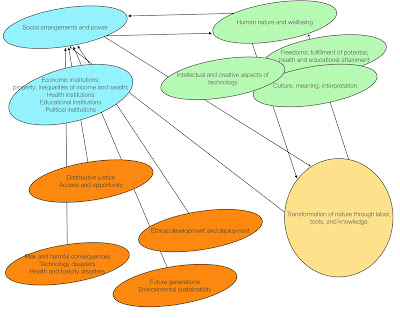
It may be that a diagram does a better job of "mapping" the field of the philosophy of technology than a simple definition. Here is a first effort:


The diagram captures the idea that technology is embedded both within the agency, cultures, and values of living human beings during an epoch, and within the social institutions within which human beings function. Human beings and social relations drive the development of technologies, and they are in turn profoundly affected by the changing realities of ambient technologies. The social institutions include economic institutions (property relations, production and distribution relations), political institutions (institutions of law, policy, and power), and social relations (gender, race, various forms of social inequality). In orange, the diagram represents various kinds of problems of assessment, implementation, development, control, and decision-making that arise in the course of the development and management of technologies, including issues of risk assessment, distribution of burdens and benefits of the effects of technology, and issues concerning future generations and the environment.

A general definition of technology might be framed in these terms: "transformation of nature through labor, tools, and knowledge". And a brief definition of the philosophy of technology, still preliminary, might go along these lines: 

The philosophy of technology attempts to uncover the multiple issues raised by "transformation of nature through labor, tools, and knowledge" within the context of large, complex societies. These issues include normative questions, questions of social causation, questions of distributive justice, issues concerning management of risk, and the relationship between technology and human wellbeing.


Saturday, April 25, 2020

Social factors driving technology


In a recent post I addressed the question of how social and political circumstances influence the direction of technological change (link). There I considered Thomas Hughes's account of the development of electric power as a "socio-technological system". Robert Pool's 1997 book Beyond Engineering: How Society Shapes Technology is a synthetic study that likewise gives primary attention to the important question of how society shapes technology. He too highlights the importance of the "sociotechnical system" within which a technology emerges and develops:
Instead, I learned, one must look past the technology to the broader "sociotechnical system" -- the social, political, economic, and institutional environments in which the technology develops and operates. The United States, France, and Italy provided very different settings for their nuclear technologies, and it shows. (kl 86)
Any modern technology, I found, is the product of a complex interplay between its designers and the larger society in which it develops. (kl 98)
Furthermore, a complex technology generally demands a complex organization to develop, build, and operate it, and these complex organizations create yet more difficulties and uncertainty. As we'll see in chapter 8, organizational failures often underlie what at first seem to be failures of a technology. (kl 1890)
For all these reasons, modern technology is not simply the rational product of scientists and engineers that it is often advertised to be. Look closely at any technology today, from aircraft to the Internet, and you'll find that it truly makes sense only when seen as part of the society in which it grew up. (kl 153)
Pool emphasizes the importance of social organization and large systems in the processes of technological development:
Meanwhile, the developers of technology have also been changing. A century ago, most innovation was done by individuals or small groups. Today, technological development tends to take place inside large, hierarchical organizations. This is particularly true for complex, large-scale technologies, since they demand large investments and extensive, coordinated development efforts. But large organizations inject into the development process a host of considerations that have little or nothing to do with engineering. Any institution has its own goals and concerns, its own set of capabilities and weaknesses, and its own biases about the best ways to do things. Inevitably, the scientists and engineers inside an institution are influenced -- often quite unconsciously -- by its culture.
There are a number of obvious ways in which social circumstances influence the creation and development of various technologies. For example:
  1. the availability of technical expertise through the educational system
  2. the ways in which consumer tastes are created, shaped, and expressed in the economic system
  3. the ways in which political interests of government are expressed through research funding, legislation, and command
  4. the imperatives of national security and defense (World War II => radar, sonar, operations research, digital computers, cryptography, atomic bomb, rockets and jet aviation, ...)
  5. The needs of corporations and industry for technological change, supported by industry laboratories and government research funding
  6. The development of complex systems of organization of projects and efforts in pursuit of a goal including the efforts of thousands of participants
Factors like these influence the direction of technology in a variety of ways. The first factor mentioned here has to do with the infrastructure needed to create expertise and instrumentation in science and engineering. The discovery of radar would have been impossible without preexisting expertise in radio technology and materials at MIT and elsewhere; the rapid development of atomic fission for reactors and weapons depended crucially on the availability of advanced expertise in physics, chemistry, materials, and instrumentation; and so on for virtually all the technologies that have transformed the world in the past seventy years. We might describe this as defining the "supply" side of technological change. Along with manufacturing and fabrication expertise, the availability of advanced engineering knowledge and research is a necessary condition for the development of new advanced technology.

The demand side of technological development is represented by the next several bullets. Clearly, in a market society the consumer tastes and wants of the public have a great deal of effect on the development of technology. Smart phones were difficult to imagine prior to the launch of the iPhone in 2007; and if there had been only limited demand for a device that takes photos and videos, plays music, makes phone calls, surfs the internet, and maintains email communication, the device would not have undergone the intensive development that it actually experienced. Many apparently "useful" consumer devices never find a space in the development and marketing process that allow them to come to maturity.

The development of the Internet illustrates the third and fourth items listed here. ARPANET was originally devised as a system of military and government communication. Advanced research in computer science and information theory was taking place during the 1960s, but without the stimulus of the government-funded Advanced Projects Research Agency and sponsorship by the Defense Communications Agency it is doubtful that the Internet would have developed -- or would have developed with the characteristics it now possesses.

The fifth item, describing the needs and incentives experienced by industry and corporations guiding their efforts at technology innovation, has clearly played a major role in the development of technology in the past half century as well. Consider agribusiness and the pursuit by companies like Monsanto to gain exclusive intellectual property rights in seed lines and genetically engineered crops. These business interests stimulate research by companies in this industry towards discovery of intellectual property that can be applied to technological change in agriculture -- for the purpose of generating profits for the agribusiness corporation. Here is a brief description of this dynamic from the Guardian (link):
Monsanto, which has won its case against Bowman in lower courts, vociferously disagrees. It argues that it needs its patents in order to protect its business interests and provide a motivation for spending millions of dollars on research and development of hardier, disease-resistant seeds that can boost food yields.
Why are there no foot-pump devices for evacuating blood during surgery -- an urgent need in developing countries where electric power is uncertain and highly expensive devices are difficult to acquire? The answer is fairly obvious: no medical-device company has a profit-based incentive to produce a device which will yield a profit of pennies. Therefore "sustainable technology" in support of healthcare in poor countries does not get developed. (Here are examples of technology innovations that would be helpful in rural healthcare in high-poverty countries that market-driven forces are never likely to develop; link.)

The final item mentioned above complements the first -- the development of business organization systems parallels the development of systems of expertise and training at universities. Engineering, operations research, and organizational theory all progressed dramatically in the twentieth century, and the ways that they took shape influenced the direction and characteristics of the technologies that were developed. Thomas Hughes describes these complex systems of government, university, and business organizations in Rescuing Prometheus, a book that emphasizes the systems requirements of both engineering as a profession and the large organizations through which technologies are developed and managed. Particularly interesting are the examples of the SAGE early warning system and the ARPANET; in each case Hughes argues that these technologies could not have been accomplished without the creation of new frameworks of systems engineering and systems organization.
MIT assumed this special responsibility [of public service] wholeheartedly when it became the system builder for the SAGE Project (Semiautomatic Ground Environment), a computer-and radar-based air defense system created in the 1950s. The SAGE Project presents an unusual example of a university working closely with the military on a large-scale technological project during its design and development, with industry active in a secondary role. SAGE also provides an outstanding instance of system builders synthesizing organizational and technical innovation. It is as well an instructive case of engineers, managers, and scientists taking a systems and transdisciplinary approach. (15)
It is clear from these considerations and examples, that technologies do not develop according to their own internal technical logic. Instead, they are invented, developed, and built out as the result of dozens of influences that are embodied in the social, economic, and political environment in which they emerge. And though neither Hughes nor Pool identifies directly with the researchers in the fields of the Social Construction of Technology (SCOT) and Science, Technology, and Society studies (STS), their findings converge to a substantial extent with the central ideas of those approaches. (Here are some earlier discussions of that approach; link, link, link). Technology is socially embedded.

Friday, April 10, 2020

Thomas Hughes on electric power as a sociotechnical system


We have quite a few ideas about how technology affects us personally and socially. But we are less aware of the ways in which facts about the contemporary social world influences the development of technology -- at any given time in history. Technological change is a complex social process, and one that is influenced by multiple large social features -- population dynamics, the education system, the institutions of property and the market that are in effect, and even political ideology.

Thomas Hughes' important 1983 book Networks of Power: Electrification in Western Society, 1880-1930 drew out the social and political influences that shaped the development of one of the most important contemporary technologies, electric power. Hughes offers a detailed narrative leading from the important scientific discoveries and inventions in the 1880s that created the possibility of using electricity for power and light; through the creation of complex organizations by such systems builders as Thomas Edison and Elmer Sprague to solve the many technical problems that stood in the way of successful implementation of these technical possibilities; to the establishment of even larger social, political, and financial systems through which systems builders implemented the legal, financial, and physical infrastructure through which electricity could be adopted by large cities and regions. (Simon Winchester tells some of the same story in a less technical way in The Men Who United the States: America's Explorers, Inventors, Eccentrics, and Mavericks, and the Creation of One Nation, Indivisible.)

Along the way, Hughes demolishes several important ideas about the history of technology. First, he refutes the notion that there was an inevitable logic to the development of electric power. At many points in the story there were choices available that did not have unique technical solutions. (VHS or Betamax?) The battle of the systems (direct vs. alternating current) is one such example; Edison's work proceeded on the basis of the technology of direct current, whereas the industry eventually adopted Tesla's alternative technology of alternating current. Each choice posed technical hurdles which required solution; but there is good reason to believe that the alternative not taken could have been adopted with suitable breakthroughs along the other path. The path chosen depends on a set of social factors -- popular opinion, the press, the orientation of professional engineering schools, the availability of financing, and the intensity of the intellectual resources brought to bear on the technical problems that arise by the research community.

Second, Hughes establishes that, even when the basic technology was settled, the social implementation of the technology, including the pace of adoption, was profoundly influenced by nontechnical factors. Most graphically, by comparing the proliferation of power stations and power grids in London, Berlin, and Chicago, Hughes demonstrates that differences in political structure (e.g., jurisdiction and local autonomy) and differences in cultural attitudes elicited markedly different patterns of implementation of municipal and residential electric power. Chicago shows a pattern of a few large power stations in the central city, London shows a pattern of myriad small stations throughout the metropolitan area, and Berlin shows a pattern of a few large stations in the center of the city. Hughes argues that these differences of configuration reflected factors including municipal jurisdiction and the economic interests of large potential users. Moreover, these differences in styles of implementation can lead to major differences in other sorts of social outcomes; for example, the failure of London to implement a large-scale and rational system of electric power distribution meant that its industrial development was impeded, whereas Chicago's industrial output increased rapidly during the same period.


Third, Hughes sheds much light on the social and individual characteristics of invention and refinement that exist internal to the process of technological change. He describes a world of inventors and businesses that was highly attuned to the current challenges that stood in the way of further progress for the technology at any given time. Major hurdles to further development constituted "reverse salients" which then received extensive attention from researchers, inventors, and businesses. The designs of generators, dynamos, transformers, light bulbs, and motors each presented critical, difficult problems that stood in the way of the next step; and the concentrated but independent energies of many inventors and scientists led frequently to independent and simultaneous solutions to these problems.

Fourth, Hughes makes the point that the development of the technology was inseparable from the establishment of “massive, extensive, vertically integrated production systems,” including banks, factories, and electric power companies (Hughes 1983, 5). “The rationale for undertaking this study of electric power systems was the assumption that the history of all large-scale technology—not only power systems—can be studied effectively as a history of systems” (p. 7). The technology does not drive itself, and it is not driven (exclusively) by the technical discoveries of the inventor and scientist. Rather, the eventual course of development and implementation is the complex result of social pulls and constraints, as well as the inherent possibilities of the scientific and technical material.

Finally, Hughes introduces the important concept of “technological momentum.” By this concept, he means to identify the point that a large technology—transportation, communication, power production—once implemented on a wide scale, acquires an inertia that is difficult to displace. Engineers and designers have acquired specialized knowledge and ways of approaching problems in the field, factories have been established to build the specialized machines and parts needed for the technology, and investors and banks have embedded their fortunes in the physical implementation of the technology. “Business concerns, government agencies, professional societies, educational institutions, and other organizations that shape and are shaped by the technical core of the system also add to the momentum” (p. 15). So VHS technology came to dominate Betamax, and the QWERTY keyboard has outlasted competitors such as the Dvorak keyboard arrangement.

Hughes demonstrates several important lessons for anyone interested in the development of modern technology systems. First, through his detailed account of a complex 50-year international process of design and implementation, he shows that the development of a large technological system like electric power is an example of a path-dependent and contingent process. Nonetheless, it is a process that can be explained through careful historical research, and a variety of large-scale social and institutional factors are pertinent to the outcomes. Second, he demonstrates the important scope of agency and choice within this story. Outcomes are contingent, and individuals and local agents are able to influence the stream of events at every point. And finally, through his concept of technological momentum, he provides a constructive way of thinking about the social influence of technology itself within the fabric of historical change—not as an ultimate determinant of outcomes but as a constraining and impelling set of limitations and opportunities within the context of which individuals strategize and choose.

Hughes gives further support for the point of plasticity of social change made frequently here by demonstrating the sensitivity of the course of technology development to the social and political environment. Technological possibilities and constraints do not by themselves determine historical outcomes—even the narrow case of a particular course of the development of a particular cluster of technologies. The technical and scientific setting of a particular invention serves to constrain but not to determine the ultimate course of development that the invention takes. A broad range of technical outcomes are accessible in the medium term. In place of a technological determinism, however, Hughes argues for technological momentum. Once a technology/ social system is embodied on the ground, other paths of development are significantly more difficult to reach. Thus, there are technological imperatives once a new set of technical possibilities come on the scene; but the development of these possibilities is sensitive to nontechnical environmental influences (e.g., the scope of local political jurisdiction, as we saw in the comparison of British, German, and American electric power systems).