Friday, May 12, 2023
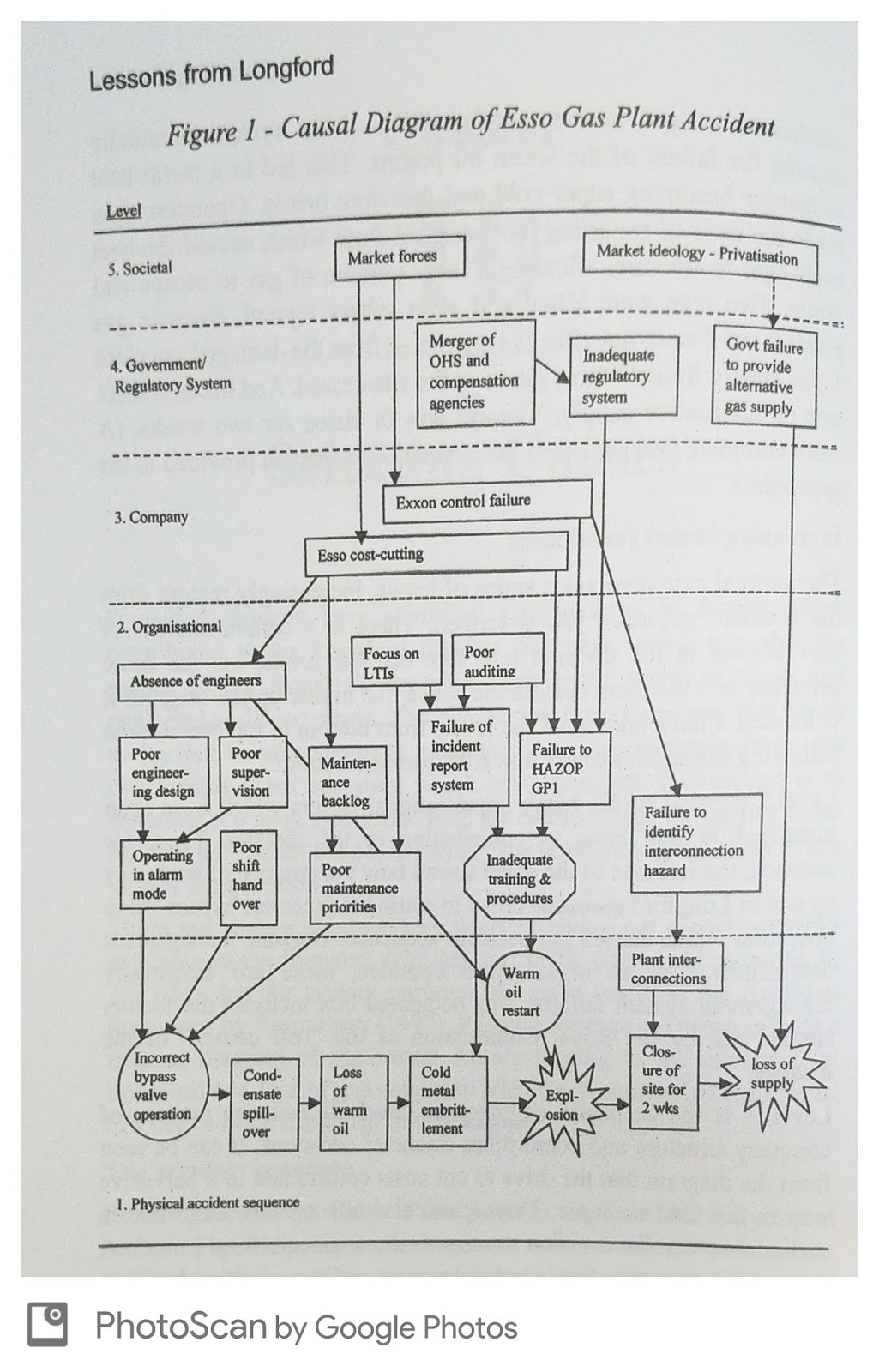
Sources of technology failure
Friday, May 5, 2023
Authoritarian steps in Red state legislatures
Is it so hard to picture a United States that has succumbed to authoritarianism and the sacrifice of our basic democratic rights? Not really, because we can see this process at work in a handful of Republican-dominated state governments already. Here are just a few examples of states in which governors and legislatures are using the power enabled by "super-majority" status to limit the rights and liberties of their citizens with impunity. These are just a few examples, and it would be very useful for a trusted organization like the ACLU to do a full audit of these kinds of actions in the states.
- Florida -- legislation limiting freedom to teach about "uncomfortable" subjects in public schools and universities; ideological takeover of a public university by the governor and hack politicians; banned books in school libraries; a declared war on a private corporation using the power of the state to punish Disney
- North Carolina -- new Republican majority on North Carolina supreme court reverses prior supreme court decision on racially suspect gerrymandering and voter ID requirements
- Tennessee -- expulsion of democratically elected representatives Justin Jones and Justin Pearson from the Tennessee House of Representatives
- Montana -- Montana Republicans bar duly elected transgender lawmaker Zooey Zephyr for "decorum"
- Idaho -- legislation prohibiting people in Idaho from helping pregnant minors leave the state to obtain abortions; similar efforts in other Republican super-majority states
- Texas -- legislation enacted to permit the Texas secretary of state to overturn elections in the state's largest county; legislation prohibiting "Diversity, Equity, and Inclusion" programs at universities moves forward; ban on use of FDA-approved mifepristone to effect medical abortion; other states and conservative Federal court rulings abet this effort
- Multiple states -- near-total abortion bans in twelve states (Alabama, Arkansas, Idaho, Kentucky, Louisiana, Mississippi, Missouri, Oklahoma, South Dakota, Tennessee, Texas and West Virginia)
It is a terrible picture, if you care about the equal worth of all citizens, and a commitment to full and extensive liberties for all. Reproductive rights are suddenly limited; rights of freedom of thought and expression are limited; groups of citizens are singled out for punitive treatment, including LGBTQ and trans people; voting rights for urban people and people of color are deliberately limited; teachers, librarians, and faculty are intimidated from teaching and speaking independently.
How are we to understand all of these regressive uses of state power? Here is a very plausible thought: They represent an incipient authoritarian imposition of Christian nationalist ideology on the whole of our society. And what is this, if not an early stage of Orbánism in America? It seems evident that numerous Republican-dominated states have already taken clear steps in that direction. Is the soft authoritarianism of today's Hungary the future of political life in the United States? What will it take to restore democratic freedom and equality in our country?
Thursday, April 27, 2023
Analytical sociology and contentious politics
Analytical sociology is, as its proponents say, a meta-theory of how to conduct social research. In their contribution to Gianluca Manzo's Analytical Sociology: Actions and Networks Peter Hedström and Petri Ylikoski offer these core principles:
- provide explanations of social outcomes of interest based on the mechanisms that produce them;
- identify mechanisms at the level of the actors who make up those outcomes
- strive for realism in assumptions and hypotheses
- be pluralistic about theories of actor motivation and decision making processes; and
- build explanations from individuals to social outcomes.
Sunday, April 23, 2023
Psychology of "comradeship" in Hitler's armies
What motivates violence, sacrifice, and atrocity among members of the military and other armed units in times of war and occupation? Christopher Browning asks this question for the members of Order Police Battalion 101 in Ordinary Men (link), and Thomas Kühne asks similar questions in The Rise and Fall of Comradeship: Hitler's Soldiers, Male Bonding and Mass Violence in the Twentieth Century. Kühne notes the parallels and contrasts between the two books in these terms:
Unaffected by military sociology, the Holocaust historian Christopher Browning, in his 1992 book on the German Police Battalion 101, nevertheless illuminated how group pressure, a basic feature of comradeship, enabled the perpetration of the Holocaust. While not explicitly addressed in Browning's book, comradeship again does not appear as the epitome of altruistic solidarity but as the engine of evil per se, deeply ingrained in the machinery of Nazi terror. Widely praised in Germany just as in America and other parts of the world, the book's argument thus yet raised concerns among readers who still appreciated comradeship as a core virtue of soldiers. An officer of the German Bundeswehr, for instance, warned about generalizing Browning's findings. The social psychology of Himmler's murder troops had nothing to do with the military virtue of comradeship, he clarified. Instead, he said, Himmler's men had “completely perverted this concept of dedicated commitment between soldiers.” (4)
Kühne's research depends on a very engaging combination of relevant sociological theory and careful analysis of letters and interviews of soldiers and veterans. He regards "comradeship" as both myth and sociological reality -- myth, in that its themes of heroic masculinity were romanticizations of the realities of a soldier's life, and reality, in that some core values of "comradeship" served both to motivate and to constrain the conduct of individual soldiers in the Wehrmacht. The value system of comradeship implied a strong degree of compliance with the group:
The benefits of comradeship were reserved for those who surrendered their Selves, their individual desires and their agency, to the group of comrades. The myth of comradeship leveled the ground for a conformist ethics that honored only what served group cohesion and denounced the concept of individual responsibility. (11)
And Kühne emphasizes the moral ambiguity of the concept of comradeship:
Once widely accepted as the epitome of altruistic solidarity and cooperation, of moral goodness, of humaneness per se, the concept came, by the end of the twentieth century, to be seen as a euphemism for criminal complicity and cover-ups – for collectively committed, clandestine evil. (12)
The hard question here is the question of motivation: to what extent did the meanings and values of "comradeship", solidarity with one's comrades, lead to both courage and atrocity? And to what extent was the value system of comradeship a coercive social order for soldiers in the Wehrmacht, creating a powerful set of pressures to conform even when the actions of the unit were atrocious?
Here is a passage that captures much of the psychology and mental state/identity that Kühne identifies with “comradeship” from the Wehrmacht.
A few weeks before the Third Reich collapsed, Kurt Kreisler, a thirty-three-year-old NCO fighting in the East against the Red Army, seemed to be in the best of moods. Most of his comrades had been killed in action, but there was something that made up for mass death all around him, he wrote in a letter to his parents in Baden. Social life trumped physical death. Only recently the shrunken battalion — merely 150 soldiers — had successfully defeated a Soviet detachment of 1,000 men. The mood of his outfit “couldn’t be better,” he wrote. Although assembled only shortly before, they got along splendidly. Immediately becoming “the best of friends” with men one had never known before induced a feeling of great community that became stronger the more devastating the nation’s future looked. Kreissler’s conclusion in February 1945 was: “We want to stick together, we want to fight together, or we want to get wounded together — that’s what we are longing for.” (107)
(Kühne notes a few pages later (114) that Kreisler was not typical or ordinary at all; he had been a salaried Hitler Youth leader, and had volunteered for the army at the advanced age of 28.)
Kühne links the thoughts expressed in Kreisler's letter to the work of Edward Shils and Morris Janowitz in their sociological explanation of small-group cohesion in combat units. They quote CH Cooley’s earlier ideas about small group identities: the theory that intimate face-to-face associations of primary groups enable “a certain fusion of individualities in a common whole so that one’s very self … is the common life and purpose of the group … a ‘we’ that is built on ‘sympathy,’ ‘mutual identification’ and ‘intimacy.’”. But, as Kühne notes, this theory paradoxically cleanses the typical Wehrmacht soldier of a Nazi or racist identity; it is loyalty to the small group rather than devotion to Nazi ideology that motivated the typical soldier, they imply. The Shils-Janowitz interpretation was challenged by Omer Bartov, who attributed soldierly solidarity to other factors: “the racist demonization of the enemy in the East; the harsh discipline; and ‘de-modernization of the front’ — the animal-like material conditions of the soldiers — which brutalized and barbarized them…. In Bartov’s view, the Wehrmacht was by no means an apolitical, ‘normal’ army but exactly the opposite: deeply Nazified, a crucial engine of the Nazis’ genocidal project” (109).
Kühne prefers an approach that includes both the psychological processes of “primary group solidarity” and the macro-institutional processes of military discipline, patriotic symbols, and virulent anti-semitism to explain the “fighting spirit” of Wehrmacht soldiers even after all hope of victory had vanished. And he suggests that the concept of “comradeship” encompassed both levels: “Comradeship as understood by many Germans in the interwar and Nazi period aligned and reconciled primary group bonding and secondary symbols of national unity” (111).
The Wehrmacht united 17 million German men of different, though mostly younger, ages; of urban and rural backgrounds, and of all social classes; of all political and ideological camps, from Nazis to conservatives, liberals, Social Democrats, and even communists; of all religious and non-religious creeds (including some Jews, who managed to hide in the Wehrmacht); and of course of enormously different personalities; men who had embraced the Hitler Youth or other sections of the German youth movement, and those who would have preferred to pursue their own careers and enjoy their private lives as husbands and fathers. To whom did comradeship matter, and in what ways? (113)
Kühne emphasizes the sociological observation that “communities” often depend on a clear definition of “others” to whom they are antagonistic — the role played by anti-Semitism and anti-Slav ideology within the Nazi ideological system.
Comradeship was a set of concentric circles, pulling men into face-to-face communities and into “secondary,” anonymous and imagined groups such as the entire army, the mystic community of fallen soldiers, and the Volksgemeinschaft. The military discourse on social relations and social cohesion in interwar Germany had supported this idea of comradeship. (134)
Comradeship in combat is one thing; but Kühne links the social motivations of comradeship to atrocity and genocide as well.
Without the Wehrmacht’s support, the Einsatzgruppen — the SS and the police — often in conjunction with local collaborators, could not have killed more than a million Jews. Wehrmacht headquarters registered the Jews of a conquered region or city, forced them to wear visible identification, and concentrated them in ghettos. Wehrmacht units rounded them up and herded them to the execution sites, which the soldiers then shielded from public view, or they took bizarre pleasure in watching the spectacle. Individual soldiers or entire units joined in when the shootings started…. Some Wehrmacht soldiers took pleasure in murdering civilians, or at least they carried out the tasked they had volunteered for as cynically and cold-bloodedly as SS men, police officers, and local collaborators did. (142)
But Kühne suggests that Nazi ideology never achieved the total domination it sought of the inner lives of the millions of soldiers under arms:
Despite all indoctrination efforts by the regime, this ideological, political, and cultural diversity [across individual soldiers] still survived in Third Reich society, and subsequently also in the Wehrmacht, which reflected society. (142)
Nonetheless, he suggests that Nazi ideology held by officers was a decisive factor in determining whether a given Wehrmacht unit engaged in murder of Jews:
When it came to taking action against Jews or other civilians, it was often the ideological disposition of the commanding officers and the choices they made that decided whether or not a Wehrmacht unit collaborated in mass murder. (143)
Two opposing value systems directed the Wehrmacht soldiers’ choices: on the one hand, the universal virtues of human compassion and pity for the weak, enjoining mercy for the unarmed civilian and a defeated enemy; on the other hand, the harsh racist ideology that denounced the idea of universality and demanded, as Himmler put it, an “ethics” that complies “solely with the needs of our people. Good is what is useful for the people, evil is what damages our people.” (143)
He notes that some soldiers and officers acted on the basis of compassion. For example:
When the commanders of three parallel companies of Infantry Regiment 691 … were ordered by their superiors to kill the Jews in their respective districts, only one of them, Reserve Lieutenant Sibille, a forty-seven-year-old teacher, refused to carry out the order, explaining that he “could not expect decent German soldiers to soil their hands with such things” as the killing campaigns of the Einsatzgruppen. Asked by his superior when he would finally become “hard,” Sibille answered: “in such cases” — when it was to murder Jewish civilians including women and children — “never.” (142-143)
So far comradeship was joined with military success. But the Barbarosa campaign soon turned into a disaster for the German armies. How did comradeship survive during the collapse of the Wehrmacht?
In the last two years of the war, comradeship did not vanish but it was altered. Solidarity, humanity, and tenderness in the face of mass death gave way to a new, Nazified idea of collective identity. there may still have been a few efforts by soldiers to preserve humanity in the midst of the violence but this kind of comradeship was increasingly overshadowed by a new type of bond, one that was driven by cynicism rather than care and tenderness…. Comradeship denoted inclusion, belonging, solidarity, and togetherness, but its reality depended on its opposite, the Other, the foe — exclusion. The Other could be the overwhelming enemy soldier or the denigrated enemy civilian. (170-171)
Earlier posts have considered some of the themes that have been prominent within empirical psychology of morality. How do Kühne's findings relate to those themes? As noted above, there are suggestive parallels between Kühne's research and that of Christopher Browning in Ordinary Men. But there are a number of important convergences with the literature in moral psychology as well. Here are a few:
- identity was important to soldiers' motivations -- identity as a man, as a Protestant, as a German, as a patriot
- pre-war identities and value systems (political, religious, ethical) persisted in the private moral universes of many millions of Wehrmacht soldiers
- the moral emotions stimulated by intense experiences within small groups created unusually strong motivations of solidarity, loyalty, affection, and sacrifice for fellow soldiers within the group
- worldview (ideology) was an important factor in creating a willingness to kill the innocent
- preserving a preferred self-conception was an important part of the space of judgment and action or inaction for many soldiers
- for most soldiers, there was at least a degree of conflict between their human impulses of pity, compassion, and reluctance to harm the innocent, on the one hand, and the brutalized actions demanded by their Wehrmacht roles
- Nazi ideology and dehumanization of Jews, Slavs, and other non-Aryan peoples played an important role in the willingness of some soldiers to commit mass murder
These observations can be tied back to the primary areas of research in moral psychology identified in Ellemers et al review of the field of moral psychology (link): moral reasoning; moral judgments; moral behavior; moral emotions; and moral self-views.
Finally, Kühne's research complements the work of Kristen Monroe in "Cracking the Code of Genocide: The Moral Psychology of Rescuers, Bystanders, and Nazis during the Holocaust" (link) in its detailed use of first-person documents created by Wehrmacht soldiers and veterans. These letters, diaries, and other personal writings give important insight into the mentalities of the diverse men who served in Hitler's armies -- from the former Hitler Youth leader Kurt Kreisler to the refusenik Reserve Lieutenant Sibille -- and who served in Hitler's genocidal wars. It is worth considering whether Monroe's theory of the mentalities of genocider, bystander, and rescuer finds support in Kühne's account.
Friday, April 21, 2023
Psychology of morality
Morality is a part of everyday life and personal experience. It is also, of course, the subject of a large field of philosophy -- philosophical ethics. What principles should I follow in action? What kind of person do I want to be? What do I owe to other people in a range of circumstances?
So it is worth asking how much we can learn about real everyday moral behavior from the empirical research psychologists have done on these questions to date. What insights can we gain from empirical research into the question, “why do people behave as they do in ‘morally’ salient circumstances”? And of particular interest — are there findings that are useful for understanding the behavior of “ordinary people” in times of catastrophe?
Naomi Ellemers, Jojanneke van der Toorn, Yavor Paunov, and Thed van Leeuwen's "The Psychology of Morality: A Review and Analysis of Empirical Studies Published From 1940 Through 2017" (link) provides a large literature review of research in the psychology of morality since 1940. Based on content analysis of almost 1,300 research articles. published since 1996, they have classified research topics and empirical methods into a small number of categories. Here is a cluster graph of their analysis.
Empirical approaches and measures: The authors find several fairly distinctive empirical approaches to problems in moral psychology. Most of these approaches primarily make use of self-reports and questionnaires by subjects in response to morally relevant questions. Topics include —
- hypothetical moral dilemmas
- lists of traits or behaviors,
- endorsement of abstract moral rules, and
- position on specific moral issues (Table 1).
The bulk of these studies rely on correlational analysis. Some of the research papers reviewed make use of controlled experiments in which a set of controlled laboratory circumstances or a series of questions are presented to the subject, and the researcher hopes to discover causal relationships based on variations in behavior resulting from changing experimental conditions. (It is striking that neither of the most famous experiments on moral behavior are mentioned or placed within the conceptual structure of the authors' findings: the Milgram experiment and Philip Zimbardo's Stanford Prison Experiment.)
Ellemers et al further differentiate studies of morality according to the level of mechanism that is the primary object of investigation: intrapersonal, interpersonal, intragroup, and intergroup mechanisms. Here is their brief summary of these levels of mechanisms:
(a) research on intrapersonal mechanisms, which studies how a single individual considers, evaluates, or makes decisions about rules, objects, situations, and courses of action; (b) research on interpersonal mechanisms, which examines how individuals perceive, evaluate, and interact with other individuals; (c) research on intragroup mechanisms, investigating how people perceive, evaluate, and respond to norms or behaviors displayed by other members of the same group, work or sports team, religious community, or organization; and (d) research on intergroup mechanisms, focusing on how people perceive, evaluate, and interact with members of different cultural, ethnic, or national groups. (342)
Here is their tabulation of "number of publications" classified by mechanism and research theme.
"Intrapersonal" mechanisms are the predominant object of research in all research areas except "Moral judgments", and "Intragroup" mechanisms are least frequently examined across the board.
The authors identify three "seminal publications" in the field of the psychology of morality: Haidt 2001, Greene et al. 2001, and Jost, Glaser, Kruglanski, and Sulloway 2003. They also provide the top three seminal publications for each research area. These are selected based on the total number of citation each article received.
This article succeeds in providing an abstract map of topics, methods, and levels of analysis across a reasonably comprehensive set of research articles published between 1960 and 2017. The extensive list of references the authors provide is a course in itself on the current state of empirical moral psychology. (Interested readers will also find much relevant discussion in Hellemers' monograph, Morality and the Regulation of Social Behavior: Groups as Moral Anchors.)
Two other articles are worth considering on the question of how we should go about trying to understand "human morality and moral behavior" using empirical methods.
Kristen Monroe's "Cracking the Code of Genocide: The Moral Psychology of Rescuers, Bystanders, and Nazis during the Holocaust" (link) is particularly interesting in connection with the problem of understanding how "ordinary people" can commit evil actions. Her article provides both a useful survey of a large literature of social-psychology studies of individual genocidal behavior, and her own original research based on close analysis of extensive interviews with genociders, bystanders, and rescuers. Especially important among the sources included in Monroe's literature review is The Courage to Care (Rittener, C., & Myers, S. (1986)), which provides a large collection of Holocaust-era survivor interviews from each category. Monroe's 2012 monograph Ethics in an Age of Terror and Genocide: Identity and Moral Choice goes into more extensive detail on the main findings of "Cracking the Code of Genocide" concerning what we can learn from interviews with participants about the nature of moral conduct.
Most interesting is Monroe's own work in which she performs detailed analyses of 100 interviews in order to identify underlying themes and psychological factors. She uses "narrative interpretive analytic methodology" (706) to sort out factors of psychological importance. Monroe's analysis finds that there are distinctive differences in self-images, worldview, and cognitive classifications (700) across these three groups of participants.
A narrative interpretive analysis of in-depth interviews with bystanders, Nazis, and rescuers of Jews during the Holocaust reveals the intricate but critical importance of psychological factors in explaining behavior during genocides.... Bystanders see themselves as passive people, lacking in control and low in efficacy. The Nazi self-image is as victims who need to protect themselves and their community. Rescuers consider themselves connected to all human beings through bonds of a common humanity. The rescuers' idealized cognitive model of what it means to be a human being is far more expansive and inclusive than the model employed by bystanders or Nazis. (700)
She offers six major findings:
- Self-image is the central psychological variable
- Identity constrains choice for all individuals
- Character and self-image are not all. A critical ethical aspect of identity is relational
- The ethical importance of values works through the fashion in which values are integrated into the speaker's sense of self and worldview
- Personal suffering, in the form of past trauma, heightens awareness of the plight of others for rescuers; for bystanders and Nazis, however, it increases a sense of vulnerability
- Speakers' cognitive categorization systems carry strong ethical overtones. (711)
Gabriel Abend looks at the field of moral psychology from the other end of the telescope in "What the Science of Morality Doesn’t Say About Morality" (link). He provides a literature review the current research area in moral psychology that aims to discover a neuroscience analysis of morality. This field of research program attempts to provide neurophysiological correlates with moral judgments. "What brain areas are “activated,” “recruited,” “implicated,” “responsible for,” or “associated with” making moral judgments?" (162). Abend's article provides a sustained critique of the assumptions in use in this field, and what he regards as its over-emphasis on one small aspect of "morality in everyday life": the question of moral judgment. Against the idea that this line of research constitutes the whole of a "new science of morality", Abend asks for methodological and theoretical pluralism. "I call for a pluralism of methods and objects of inquiry in the scientific investigation of morality, so that it transcends its problematic overemphasis on a particular kind of individual moral judgment" (abstract).
Thursday, April 13, 2023
Social science study of the Holocaust
The complex realities of the Holocaust are now more than seventy-five years in the past. And yet the history, causes, and variations of this nightmare period have not yet been adequately understood (link). An excellent recent volume makes the case that social scientists -- political scientists, sociologists, demographers, economists -- potentially have much more to offer than they have done to date. In Politics, Violence, Memory: The New Social Science of the Holocaust, Jeffrey Kopstein, Jelena Subotić, and Susan Welch have assembled a rich collection of articles from current social-science research that illustrates the value that social science perspectives can bring to understanding the complex events that make up the Holocaust. (Here is an earlier post summarizing historians' silence about the Holocaust following the end of World War II; link.)
The editors' introduction provides an analysis of the incentives of the disciplines of the social sciences to account for the relative neglect of questions surrounding the Holocaust in political science, sociology, and demography in the 1960s through the 1980s and 1990s. The topic was likely to be considered an "area study", far from the methodological and theoretical orthodoxies of the established social science disciplines. It was a "special case" and not amenable to the large-scale generalizations preferred by social-science methodologies at the time.
Within political science in particular, perhaps nothing illustrates the delay in taking up the Holocaust as an object of study more poignantly than the fact that the first panel in the history of the annual meeting of the American Political Science Association devoted entirely to the subject appeared in the program only in 2011. (p. 19)
What can social scientists bring to contemporary Holocaust research? A key underling theme that runs across many of the essays is the idea that we should approach the Holocaust, not as a single unified event, but as a series of parallel and geographically and nationally separated events and processes. Here is a formulation of this idea by the editors in their introduction:
Charles King elaborates on his idea that the Holocaust is best seen by social scientists as a series of events, shaped in large part by local actors attuned to their own circumstances and institutions alongside the state strategies of the occupying power. He also highlights the Holocaust as a product of interstate collaboration and competition, the dynamics of which greatly affected outcomes in different nations. (p. 30)
Here is King's own formulation of the idea:
The macrohistorical phenomenon is so large and multilayered that a social science of it seems meaningless, or perhaps too meaningful. The Holocaust is thus best seen not as a single “case” but as a macrohistorical matrix of highly variable forms of mass killing, resistance, and survival. Recent work within Holocaust studies and an emerging literature offering social scientific insights on the Holocaust itself have revealed a vast field of variation—from the identity of perpetrators, to the possibility of resistance and survivorship, to the evolution of mass killing as state policy. (p. 43)
And Daniel Ziblatt summarizes this approach in his concluding essay in these terms:
Recently, historians have pushed back against this narrative with more fine-grained attention to local and decentered unfolding of events (Gross 2001; Bartov 2018). This volume represents a sustained effort of social scientists to join this conversation. This happens at a moment when not only social scientists but also historians have moved to the micro. At the core of this intellectual convergence is the proposition that the Holocaust is not simply to be thought of as a single “case” or “singular event” that occurred between 1933 and 1945, directed by the hierarchical German Nazi war machine. Instead, King (chapter 1) and the other authors suggest that the Holocaust should be conceived of as a process of (1) disparate events—mass killings, pogroms, forced migration, resistance, and survival; in which (2) multiple types of actors—perpetrators, victims, and bystanders— participated; all in (3) multiple locations—far from Berlin, and outside of German-directed concentration camps, and instead spread across the diverse landscape of both urban and rural communities in Central and Eastern Europe. (pp. 454-455)
The idea here is that it is valuable and insightful to examine the regimes of killing encompassed by the Holocaust at a range of levels -- macro, meso, micro; geographical; bureaucratic/military/organizational; gender; and other dimensions as well. And contributors argue that this strategy of disaggregation permits comparison across cases that sheds light on the behaviors, capacities, and outcomes that were present in different locations -- Lithuania, Hungary, or Denmark, for example.
This approach is similar to an important stream of research in historical sociology: comparative historical sociologists and new institutionalists who seek to understand the meso-level social arrangements that differentiate across apparently similar cases. This preference flows from an assessment of where the causal action is to be found: not at the grand level of macro-structures, but at the intermediate and contingent level of meso-level social processes and arrangements. It is a methodology that directs our attention to the social mechanisms through which outcomes of interest have arisen, and also account for the variations across episodes that we can observe. (McAdam, Tarrow, and Tilly make this point in Dynamics of Contention.)
The thrust of King's chapter, echoed in many other contributions, is that we can fruitfully seek out causes of mass killings in the borderlands (Ukraine, Belarus, Lithuania) by understanding the chronology, location, and population details of various episodes, and then engaging in careful comparison across cases to sort out what appear to be operative social influences (or what we might also call social mechanisms). How did mass killings by civilians vary across instances in ways that can be associated with factors like religious affiliation, existence of inter-group relationships, ideology, economic duress, and other factors?
This approach affirms that there were certainly macro-level causes at work -- German state policy and military decision-making -- but that these macro-level actions did not uniquely determine the outcomes. Both Eugene Finkel and Jeffrey Kopstein argue in their chapters for the importance of episode-specific factors in seeking to understand the ways that different locations displayed different patterns of resistance and mass murder. Kopstein's comparison of the occurrences of pogroms in 1941 in Lithuania and Ukraine illustrates the point. He asks:
What, then, was the meaning of the pogroms of summer 1941? Why engage in these exercises in public humiliation and brutality? Let us return to the simple statement made at the outset of this chapter: pogroms occurred in less than 10 percent of the localities in Western Ukraine where Jews resided. In other places, pogroms either were stopped, in many cases by local Ukrainian heroes, or never got off the ground in the first place. What distinguished these two very different kinds of localities? (p. 180)
Jan Burzlaff's contribution offers an historian's appreciation for the importance of finding a level of analysis that is neither too general nor too particular:
The second chief benefit for historians stems, I believe, from the close attention that social scientists pay to variations, paving the way for a middle ground between law-like regularities and historians’ attention to specificity. It is a truism that the Holocaust unfolded very differently across various countries, regions, even cities—hence the importance of understanding both Nazi policies and social processes on the ground (Bloxham 2009). The combination of different scales of analysis not only allows for a more careful understanding of how local and communal factors played a role in the Holocaust’s unfolding, but also dismisses one-size-fits-all approaches to the origins and variety of Nazi violence and—above all—the absence of neighbor-on-neighbor violence in specific communities (Bartov 2018). (p. 100)
In addressing the facts of the Shoah, it is crucial for historians and social scientists to fully recognize the depth of the human catastrophe that the Holocaust represented. This is one reason why there has been a continuing debate over the question of whether it is ever legitimate to compare the Holocaust to other horrific instances of genocide (link). King addresses the issue of comparability in an appropriate way:
It is fully possible to accept the uniqueness of the Holocaust as a world-historical event while also fruitfully comparing each of its myriad components with their cognates elsewhere: the relationship between ideology and purposeful killing, the origins of genocidal state policy, collaboration and denunciation, the politics of military occupation, rescue and resistance, the dehumanization of noncombatants, the political economy of violence, and survivorship and the politics of memory, among many others. (p. 57)
...
The problem with this view is that it too easily glides over the ethics of comparison, the morality of “modeling” human suffering, and the ultimate purposes for which scholars willingly delve into awfulness. After all, the comparison of discrete human experiences is never a cavalier exercise, especially in the realm of violence, loss, and death. The systematic and thorough nature of Nazi practice still places the Holocaust in a peculiar moral category. Its scale was gargantuan. It involved the purposeful killing of millions of individuals as well as the extinguishing of an entire civilization—the culture of the East European borderlands rooted in Jewish religiosity and the Yiddish language. It flowed from an ideology that was not just distasteful but fundamentally abhorrent, one that marshaled science and history to condemn an entire human population to elimination—in theory, anywhere its members happened to live on the entire planet. It produced social, political, cultural, and economic consequences that are still unparalleled. The Holocaust can still be a moral category of one even when specific episodes of violence, the tactics of perpetrators and heroism of resisters, and importantly the social scientific patterning within this world-historical event turn out not to be unique. The sum of every massacre, pogrom, shooting, and gassing within the Holocaust still does not quite equal the Holocaust. (pp. 79-80)
Politics, Violence, Memory provides a valuable demonstration of the importance of confronting various aspects of the Holocaust using methods and theories from the social sciences. One can only hope that it will help to bring studies of the Holocaust into the mainstream of the social sciences. It is a vast and tragic reality that we have not yet adequately understood or internalized.
(Here are two other interesting and innovative contributions to new social science research on the Holocaust: Geographies of the Holocaust, edited by Anne Kelly Knowles, Tim Cole, and Alberto Giordano, and Morality in the Making of Sense and Self. Stanley Milgram’s ‘Obedience’ Experiment and the New Science of Morality, edited by Matthew Hollander and Jason Turowetz (forthcoming).)
Tuesday, April 11, 2023
Origins of American right-wing extremism in the 1960s
The election of Donald Trump in 2016 presented mainstream America with a shocking wakeup: right-wing extremism, with its dimensions of Christian nationalism, white supremacy, racism, and anti-LGBTQ bigotry, had somehow wound up on the carousel, and was now in control. This shouldn't be a complete surprise, since the Tea Party and the rantings of Pat Buchanan in the previous decades had written many of the scripts of the president with the orange hair. But we need to know more about how the extreme right came to be a mainstream political ideology.
Matthew Dallek's Birchers: How the John Birch Society Radicalized the American Right provides one important strand of that background. Dallek argues that the John Birch Society managed to deeply radicalize the Republican political movement from its founding in 1958 to the 2010s. Dallek provides a narrative of the formative years of the Birch Society in the 1950s when activists like Robert Welch marketed an extreme anticommunism among wealthy, conservative businessmen (often including leading members in the National Association of Manufacturers). A striking feature of this story is the speed and virulence with which right-wing activists established new chapters of the John Birch Society in cities throughout the country. And it was largely a white-collar and professional group of men and women who became true believers.
By the time of the assassination of President John F. Kennedy in 1963, the society had declared itself around strident themes of anticommunism, opposition to the civil rights movement, alliance with segregationist politicians (p. 99), alignment with fundamentalist Christian groups, conspiracy theories (fluoridation of public water supplies), and unhinged attacks on school teachers and libraries thought to harbor "un-American" ideas. When the struggle for civil rights intensified in the 1960s, Dallek documents the alliances that existed between the Birch Society and the segregationist governors George Wallace and Lester Maddox (191, 199).
What is especially striking about the account Dallek offers is the "no-holds-barred" tactics used by the Birch Society in attacking its enemies. Ruining careers, threatening violence, and making unfounded accusations against their opponents were all in a day's work for this movement completely certain of its moral correctness. The recklessness and malevolence of Joe McCarthy continued in the Birch Society.
Dallek's narrative makes it apparent that there is a great deal of continuity from the early political extremism of the John Birch Society and contemporary right-wing GOP talking points -- anticommunism, conspiracy theories about public health measures, the language of white supremacy, xenophobia, and a propensity towards guns and violence. And, as Dallek demonstrates, many of these themes became talking points for Donald Trump in his first presidential campaign, and central to MAGA political speeches. But there is another similarity as well -- the behind-the-scenes alliances that existed in 1958, and continue to exist today, between highly wealthy donors and the political strategies of extremist politicians.
Pat Buchanan was not a member of the John Birch Society, so far as I know. But his influence as a far-right advocate of conservative issues -- as an opinion writer, as a presidential assistant, as a speech writer for Nixon and Agnew, and as a serial candidate for President -- has been enormous within the US conservative movement. A scan of the quotes on his official webpage illustrates these themes: Christian nationalism, extreme anti-abortion advocacy, Great Replacement Theory, racist fear of "dependent Americans", anti-immigrant bigotry, rejection of equality of citizenship, fundamental mistrust of the Federal government, anticommunism, anti-Muslim bigotry, and an apocalyptic view of the future of America. Here is one quotation from State of Emergency that encapsulates Buchanan's worldview:
If we do not solve our civilizational crisis — a disintegrating culture, dying populations, and invasions unresisted — the children born in 2006 will witness in their lifetimes the death of the West. In our hearts we know what must be done. We must stop the invasion. But do our leaders have the vision and will to do it? (State of Emergency)
Buchanan ran for the GOP presidential nomination in 1996. And, as a contemporary Newsweek profile put it, he ran on a platform of fear, mistrust, and hatred (Newsweek, March 4, 1996). Here are the closing paragraphs of the profile, illustrating Buchanan's "ethnonationalism".
Last week on CBS Radio, Buchanan defended his columns that helped free wrongly accused Nazi war criminal John Demjanjuk as "the best journalism I ever did." The critics were "fly-specking," he said. But in his March 17, 1990, column on Demjanjuk, the mistakes were hardly trivial. In arguing that diesel-engine gas could not have killed the Jews at Treblinka, Buchanan ignored evidence of deadly Zyklon B gas at Treblinka (where more than 850,000 Jews died), accused survivors of "group fantasies of martyrdom and heroics" and essentially bought the line of those who minimize the Holocaust.
His old words on immigration may pose an even larger problem in the campaign. "The central objection to the present flood of illegals is that they are not English-speaking white people from Western Europe, they are Spanish-speaking brown and black people from Mexico, Latin America, and the Caribbean," he wrote in 1984, stressing that the issue is "not about economics." (26)
(Here is the entry on Treblinka on the United States Holocaust Memorial Museum website. The historical evidence concerning the use of diesel-engine carbon monoxide as a lethal gas at Treblinka is unambiguous, and was documented in Vasily Grossman's initial reporting on Treblinka in 1944 in The Hell of Treblinka; link.And here is an article Dallek contributed to the Atlantic that does a good job of formulating his key findings; link.)
Thursday, April 6, 2023
The diachronic social
An earlier post offered what is for me a fairly large change of orientation on fundamental questions of social ontology: a conviction that the concept of ontological individualism is no longer supportable. My concern there was that this phrase gives too much ontological priority to individual actors; whereas the truth about the social world is more complex. Individuals are indeed the substrate of social structures and entities, but social entities are in turn constitutive of individual social actors.
The implication is that our social ontology needs to give equal priority to both actors and structures. But how can we make sense of these three ideas in a non-paradoxical way:
- Structures are constitutive of actors
- Actors are the substrate of structures and give rise to their properties and powers
- Both actors and structures change their properties over time through both internal and external processes
The most compelling answer will sound a bit foreign to analytically-trained philosophers, but it seems inescapable: actors and structures are linked in an inseparable loop of mutual influence over time, with both actors and structures dependent on the current ensemble of “actors-within-structures” within which they have developed, changed, and persisted. The social world is thus inherently “fluxy”, reflecting unpredictable changes in all its elements at the same time. This implies a vision of the social world that is radically different from the ancient Greek idea of “atomism”, where unchangeable “atoms” constitute more complex wholes. In this view, both parts (actors) and ensembles (structures) take on their current properties as a result of the properties of actors and ensembles in the recent past. (That’s what makes this a diachronic view of social ontology.) I can imagine Heraclitus applauding, given his cryptic suggestions about flux and patterns.
This view has radical ontological implications. For one thing, neither actors nor structures have “essential natures” or fixed and unchanging properties. Rather, the properties of structures are determined by the past and present actions and thoughts of actors and prior characteristics of structures; while the mental characteristics of present actors are shaped by the ambient social arrangements within which they develop. (We must concede that there is a biological precondition: human beings must be the kinds of “cognitive-practical machines” that can embody very extensive change.) Further, actors are influenced by ambient structures (external causes); but a given generation of actors is capable of genuine innovation and creativity (internal causes). And likewise, structures are modified by generations of actors (external causes); but structures also create opportunities for structural innovation (internal causes).
A second implication is that neither form of simple conceptions of causal determination is at work: bare individuals do not “determine” the workings of structures, and abstract structures do not “determine” the features of social agency and identity possessed by a generation of actors at a time. Both actors and structures are influenced by features of the other; but influence is not the same thing as determination.
A third implication is that the fact of interaction over time (history) is crucial for understanding the nature of social change. At a given moment in time we find a (contingent) stock of actors and structures. Through their current mental frameworks, actions, and strategies, the actors influence the future development of the structures — whether by supporting their persistence or by introducing changes into their workings. Simultaneously the current structures influence the development of the mental frameworks, normative schemes, and practices of the actors — sometimes by largely reproducing the features of actors of the recent past, and sometimes by contributing to major shifts in identity, mental framework, and social dispositions.
For given explanatory purposes we can begin our analysis of actors-within-structures at a moment in time. So, for example, we can attempt to explain several centuries of change in the Roman Empire by beginning with Augustus; investigating the public and private mentality of Romans at the time; and investigating the specifics of the institutions of power that existed in public and military institutions at the time. But the story will then unfold with a dynamic interplay between changing institutional arrangements and changing mentalities. The processes of change described here are extended over time, and they imply a high degree of contingency in the directions of change and persistence that are induced. The extended “system” of actors-embedded-in-current-structures evolves in unpredictable ways. And this is an inherently diachronic process; it is crucial for social explanations to reflect the iterative process of influence that is at work over time.
These observations imply at least four pathways of social causation — none of which is prior to the others.
- STRUCTURES cause changes in ACTORS
- ACTORS cause changes in STRUCTURES
- ACTORS cause changes in ACTORS
- STRUCTURES cause changes in STRUCTURES
There is another important fact to keep in mind. This is the fact of heterogeneity of both structures and actors. Roman institutions were heterogeneous across space, and Roman mentalities were heterogeneous across social groups and other differentia. This point is worth emphasizing:
- Both STRUCTURES and ACTORS are heterogeneous across time and space.
The “Protestant Ethic” was not a single unitary social-cultural framework across the face of Europe, and capitalist economic practices were not the same in Sweden as in Italy. Likewise, the identities and mental frameworks of individual actors and populations of actors differ across time and space. So instead of a simple causal relationship — “The Protestant Ethic diffused Europe and produced economically rational actors” we have a complex causal relationship — “A range of instantiations of post-Catholic Christian daily culture existed across Europe and produced a range of instances of social actors”.
All of this is somewhat abstract. But it coheres well with the approach to institutions, actors, and change taken by Kathleen Thelen and other new institutionalists in historical sociology. The view of institutional change offered by Mahoney and Thelen in Explaining Institutional Change is instructive. For example:
Exactly what properties of institutions permit change? How and why do the change-permitting properties of institutions allow (or drive) actors to carry out behaviors that foster the changes (and what are those behaviors)? How should we conceptualize these actors? What types of strategies flourish in which kinds of institutional environments? What features of the institutions themselves make them more or less vulnerable to particular kinds of strategies for change? (3)
And the malleability of the actor herself is emphasized as well:
If institutions involve cognitive templates that individuals unconsciously enact, then actors presumably do not think about not complying. (10)