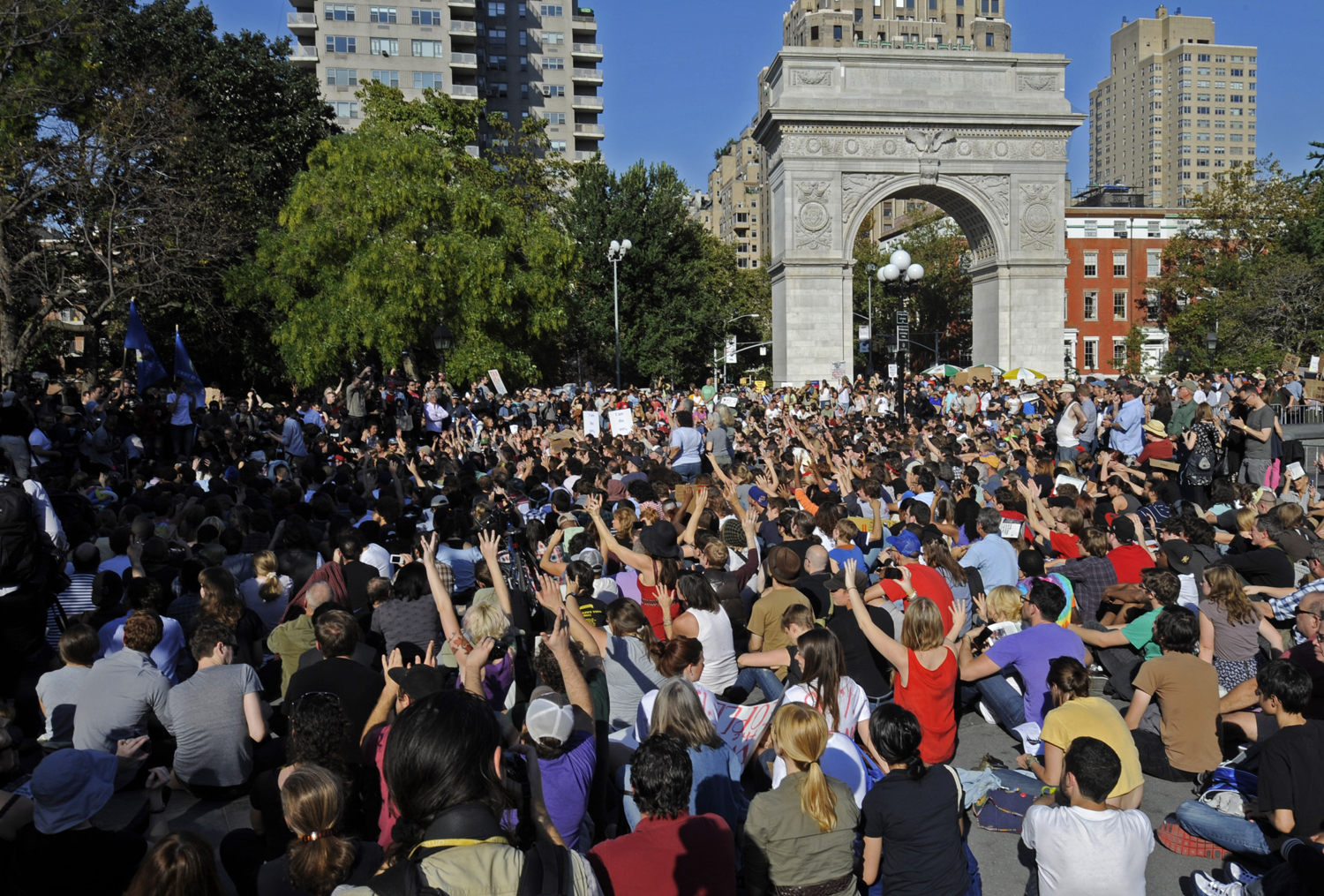
Showing posts with label collective action. Show all posts

Thursday, June 8, 2023

How "micro" does the sociology of social movements need to go?


Doug McAdam's Political Process and the Development of Black Insurgency, 1930-1970 is recognized as a leading sociological study of the US Civil Rights movement. With the addition of the new introduction to the 1999 edition, the book provides a cutting-edge treatment of the movement from the point of view of the field of contentious politics. McAdam offers three broad families of social mechanisms intended to account for the success of mobilization of groups with a grievance about the status quo:

Increasingly, one finds scholars from various countries and nominally different theoretical traditions emphasizing the importance of the same three broad sets of factors in analyzing the origins of collective action. These three factors are: 1) the political opportunities and constraints confronting a given challenger; 2) the forms of organization (informal as well as formal) available to insurgents as sites for initial mobilization; and 3) the collective processes of interpretation, attribution and social construction that mediate between opportunity and action. (viii)

And McAdam holds that these three factors help to account for the dramatic rise in Civil Rights activism, protest, and strategic choices of the movement across the South in the 1950s into the early 1960s. He asks the key question: “What led normally accepting African-Americans both in Montgomery and throughout the South to risk their livelihoods and their lives in support of civil rights?”. This is the theoretically central issue of mobilization: what factors facilitate mass mobilization around a set of interests or grievances?

Given the diversity of local situations in cities, towns, and farms across the South, we can speculate that the answer to this question will be different in different locales. But significantly, McAdam provides very little "micro-sociology" of the development of engagement on the part of ordinary African-American people making their lives in various places. He writes about the significance of churches, colleges, and the NAACP as "the organizational base of the movement" (125), but he goes into little detail about the activities and resources associated with these institutions and organizations. He writes:

Representing the most organized segments of the southern black population, the churches, colleges, and local NAACP chapters possessed the resources needed to generate and sustain an organized campaign of social insurgency. (128)

But how did these organizations actually act during the critical period; how were their actions different in different settings; and how did this influence rising activism on the part of ordinary people? What were the local processes that led to local mobilizations? His answer is a general one:

On one level, then, the importance of the churches, schools, and NAACP chapters in the generation of insurgency can be attributed to their role as established interactional networks facilitating the "bloc recruitment" of movement participants. That is, by building the movement out of established institutions, insurgent leaders were able to recruit en masse along existing lines of interaction, thereby sparing themselves the much more difficult task of developing a membership from scratch. (129)

This is a general formulation of a social mechanism. But it is not a specific and factual account of "recruitment" in a particular time and place -- for example, Montgomery prior to the bus boycott. Rather, McAdam emphasizes the idea that ordinary people saw it as their church-created duty to participate in protest. McAdam treats the church, colleges, and local chapters of the NAACP chiefly as "network" sites, where potential participants in the activist movement were located, where they further developed their claims and commitments, and where they encouraged each other in protest.

The general hypotheses provided within the current literature of contentious politics is valuable enough. But we would like to know more about variation: were the dynamics of the Black church different in Montgomery and Little Rock? Were local NAACP chapters different in their behavior or engagement, and did these differences result in differences in level and kind of activism in their surrounding communities?

Social historians of the Civil Rights movement go into much more granular detail about the movement. In greater or lesser detail, the social historians provide readers with insight into specific episodes of mobilization, conflict, and adjustment. They provide us with relatively detailed case studies of these episodes, with a reasonable amount of detail about background circumstances, existing organizations, the leadership available to the black community, instigating events, and the level of grievance and activism present in the population. For example, Aldon Morris's Origins of the Civil Rights Movement provides substantial detail about the individuals, leaders, and organizations that played important roles in the mobilization of support for movement goals in a variety of locations; Hasan Kwame Jeffries' excellent book, Bloody Lowndes: Civil Rights and Black Power in Alabama's Black Belt describes the origins of the Lowndes County Freedom Organization among black rural "tenant farmers"; and Lance Hill's Deacons for Defense does similar work in his analysis of the mobilization of rural African-American people in organized self-defense. A detailed history of particular episodes -- the Montgomery bus boycott, voter registration drives in rural Mississippi, 1960 (link) -- would give the reader of McAdam's book a much more substantial understanding of the mechanisms and processes through which activism and insurgency worked out through ordinary people and local institutions. But there is very little of this kind of detail in McAdam's treatment of the Civil Rights movement. For all its emphasis on the need for accounts of the specific mechanisms through which mobilization, coordination, and protest occurred, not very much concrete detail is provided in the study. The level of aggregation at which McAdam's analysis proceeds is "the South"; whereas we might imagine that the real nuts and bolts of the movement took place in places as diverse as Selma, Little Rock, Montgomery, and the cotton fields and hamlets of Lowndes County.

This really is the point of the discussion here. McAdam's book functions largely to lay out "theories of the middle range" about the factors that facilitate or inhibit mobilization around shared grievances, and he illustrates these theories with examples from the history of civil rights activism in the South during the time period. The central interest of the book is theoretical and explanatory, and it is illuminating. But we can imagine a different kind of study that would incorporate much more attention to the specifics of the processes and events of mobilization in various places across the South. Such a study would result in a book consisting of a handful of moderately detailed case studies, along with sociological commentary on the events and processes that are uncovered in these various episodes. 

It is suggestive that Dynamics of Contention, co-authored in 2001 by McAdam, Tarrow, and Tilly, takes just such an approach -- sociological theorizing embedded within detailed exposition of important case studies of contention. And given the emphasis that McAdam, Tarrow, and Tilly give in the 2001 book on contingency and variation across cases, we might argue that McAdam's study of the Civil Rights movement is couched at too high a level of generalization after all. It would be more instructive if it provided a more granular account of a number of episodes of mobilization, including successes and failures. (This is the reason for returning to Alain Touraine's research on the Polish Solidarity movement (post): Touraine's team did in fact engage in a granular and disaggregated study of the many strands of organization and activism that contributed ultimately to the national Solidarity movement.)


Tuesday, August 17, 2021

Social change and agency


Much of the drama of history is found in processes of large social and political change, both slow and rapid. The sudden collapse of the Soviet system in 1989 and 1990, the success of the Chinese Communist Revolution in 1949, the decades-long rise of the nationalist right in France and the United States, the rise of fascism in Germany, Austria, and Spain in the 1930s, the success of movements for female suffrage in most western democracies since the beginning of the twentieth century -- these are examples of social and political change that are of great importance for the future of humanity, for better and worse.

There is a school of thought that wants to think of social change as being largely the result of human agency: parties, leaders, social movements, organizations, and social classes bring about changes that they "want" that they plan for. And sometimes this is true enough: the Republican tax-cutting policies of the past forty years in the United States have brought about a lot of social change, and a lot of that has been deliberate. Ideology and class interests, conjoined with a determined and persistent political party, have led to a substantial shift of wealth and income to an ever-smaller percentage of the population.

But much social and historical change doesn't look like that story. The change associated with GOP tax activism is a large and important one; but it is a pretty simple one as well. It is more akin to a pirate band taking plunder from a defenseless coastal population than a long, complex process of engagement with social forces, groups, and structures aimed at creating change.

Unquestionably there is a vast amount of agency, both individual and group, in typical processes of large social change. But much of this agency is contentious and decentralized, with widely different objectives, plans, strategies, and coalitions associated with different configurations of actors. Groups set out with one set of objectives; internal conflicts lead to adjustment and re-prioritization of objectives; other groups hijack the activism and organization of competitors and redirect their efforts towards a different set of goals altogether. The result is a set of outcomes that often would create an enormous sense of surprise for the activists and actors who were involved in collective efforts at the beginning: is this what we were striving for?

This feature of the multiplicity of social actors is what makes the field of contentious politics so important and so interesting. Scholars like McAdam, Tarrow, and Tilly (Dynamics of Contention) have highlighted the complexity that underlies large social movements, and the social mechanisms through which multiple actors interact, compete, collaborate, and divide from each other. And it turns out that some of the same dynamics that are discovered in large processes of social movements are also found in more ordinary social environments as well; this is the special insight offered by Fligstein and McAdam in A Theory of Fields. Corporations, universities, and government agencies all embody some of the mechanisms of "contentious politics".

But social movements represent just one important source of social change. In broad perspective, there are a handful of different kinds of social factors that are involved in important examples of social and political change. And, significantly, all of these mechanisms play out in a social world which also possesses some dynamics of its own that are largely beyond the reach of purposeful intervention.

Change through social movements

When major segments of a population are mobilized around an issue, they can become important sources of social and political change. This raises questions from several perspectives. First, what factors lead to successful mobilization of a group? Second, what tactics and strategies are available to social groups through which they can bring about change through collective action? And third, what tactics and strategies are available to "incumbents" -- current power holders and the structures that they control -- through which they can defeat the efforts of groups involved in collective action? Concerning mobilization: a group needs to be sensitized to an issue that it can be brought to care about, and this rarely happens spontaneously. Rather, leaders and organizations are needed to convey messages, gather resources, plan for collective action, and the like. As McAdam and Kloos show in Deeply Divided: Racial Politics and Social Movements in Post-War America, the Tea Party served such an organizational role in conservative mobilization in the 2000s. Concerning tactics: groups can exercise their political will through mass actions -- demonstrations, sit-ins, occupations, boycotts, and electoral contests. They can engage in "everyday forms of resistance," in James Scott's words. And they can support "ideological" campaigns, promulgating and legitimizing the perspective of their group to other non-committed social actors. Finally, incumbents (governments and existing power-holders) can use ideological means to discredit the insurgent organizations. They can use the legitimate enforcement of the legal system to interfere with mass actions. And they can call upon organized force -- both official (police, military) and unofficial (militias, armed organizations) against the actions of insurgents. All of these dimensions have been visible in the collective actions and reactions that have occurred around the Black Lives Matter movement in the past year and a half.

Change through influential organizations

Social mobilization is rarely spontaneous. Rather, there is a need for organizations that have resources and capacities that permit them to rally supporters, conduct strikes and demonstrations, and coordinate efforts with other groups and potential allies. Coordinated collective action requires communication, confidence-building, and resources. Organizations like labor unions, political organizations, religious hierarchies, and kin groups are all able to fill these roles. Charles Tilly highlights the importance of the Catholic Church during the uprising in the Vendée (The Vendee); the Solidarity organization in Poland originating in Gdansk provided this impetus in 1980 (link); and SNCC was able to offer substantial organizational impetus to civil rights activism in the South in the 1960s. So organizations are a highly important ingredient of social mobilization; further, they can play an important role in determining the direction and strategy of a social movement. Labor unions in the United States in the 1960s played an important role in advancing the cause of civil rights, and much of this effort was prompted by the emergence of dissident union activism within unions like the United Auto Workers, including the Dodge Revolutionary Union Movement (DRUM) and Ford Revolutionary Union Movement (FRUM). Activism by African-American auto workers pushed the UAW into a more active position on the struggle for racial equality. (Here is a brief description of some of this history; link.)

Change through state power

The New Deal and the social agenda of the Roosevelt administration were examples of largescale social change initiated by a government. FDR and his political allies were able to enact programs and legislation that profoundly changed the relationship between ordinary people and the economy in which they lived. A generation later the enactment of the Civil Rights Act and the Voting Rights Act, supported by the advocacy and political efforts of the Johnson administration, led to a significant change in the political status of African-American citizens. As McAdam shows in Political Process and the Development of Black Insurgency, 1930-1970, these changes would not have been possible without wide and persistent activism and mass mobilization of the civil rights movement; but equally, they would not have occurred without the political efforts of the Johnson administration.

Change through education, media, entertainment

Public perception and worldview plainly play a crucial role in social mobilization and engagement in a struggle for social change. It is evident, then, that the content and pervasiveness of the institutions through which the opinions and perceptions of ordinary citizens are shaped are significant factors in the impulse towards social change. If children and young adults are exposed to values of human equality, freedom, and democracy throughout their education, it is more likely that they will be responsive to issues of racism and authoritarian state behavior later in their lives. On the other hand, if the content of the educational system downplays the importance of equality and democracy and minimizes the history of racial and sexual discrimination, then many in the population will be unmoved by calls for mobilization for greater equality. The influence of right-wing media on political attitudes has been well documented for the past several decades, and this is intentional: the owners of Fox News and similar sources have a message they want to convey, and their programs embody that message. And social media like Twitter, Facebook, Instagram, or right-wing sites like Parler and Rumble have proven to have an enormous capacity for generating hate-based activism. The institutions of education, media, and entertainment must be counted as causal factors in the occurrence of social and political change.

Change through generational and demographic shifts

These factors serve to identify some of the direct and purposeful sources of social and political change. But, as historians like Emmanuel Ladurie and Ferdinand Braudel demonstrated (link), there are long waves of change in history that are only remotely related to the intentions and purposes of the current generation. Long, slow processes can lead to substantial social change over time (link). For example, Paul Abramson and Ronald Inglehart argued that a large factor driving change in post-World War II democracies was "generational change and value replacement" (link). Here the idea is that value change in a nation is less about individuals and more about the shifting mix of cohorts of individuals over time. Here is their formulation of this hypothesis in the abstract to this paper:

Generational replacement has had a major impact on the distribution of materialist/post-materialist values among Western publics. Between 1970 and 1984 the ratio of post-materialists to materialists increased substantially in West Germany, Britain, and The Netherlands, and increased somewhat in France. In Belgium and Italy materialist values increased as a result of short-term forces conducive to materialism. In Germany, Britain, and The Netherlands population replacement contributed to the rise of post-materialism. In France, it reversed short-term forces contributing to materialism, while in Belgium and Italy population replacement partially offset short-term forces that contributed to materialist values. Analysis of the impact of generational replacement sheds light on the development of value orientations in Western societies and on a process through which attitude change occurs among mass publics.

Inglehart extends this argument along with Pippa Norris in Cultural Backlash: Trump, Brexit, and Authoritarian Populism to offer a degree of reassurance about the likely future of extremist populism: the tide of progressive attitudes towards race and ethnicity is very powerful, and right-wing extremism should be expected to decline.

A similar argument can be made about demographic change in the ethnic composition of a region or country. No particular individual needs to change his or her culinary tastes, in order for the ratio of Swedish restaurants to Polish restaurants to shift as a result of largescale immigration of Swedish families into the region. And if Swedish people are, on average, more liberal than Polish people, then the region becomes more liberal -- even though no individual has become more liberal.

Other longterm causes of large social and political change

It is clear that there are longterm processes of change in the world that affect us greatly, but appear to be "systemic" rather than agentic. Did anyone intend the deindustrialization of cities in what came to be known as the Rustbelt -- Cleveland, Peoria, Milwaukee, Flint, Erie? Was there a grand plan behind the sudden ubiquity of the Internet, websites, and social media? Does the shift in population balance between the midwest and the south and plains states reflect a plan or policy? In all instances the answer in "no." These are extended, anonymous processes that result from activities aimed at other goals altogether -- outsourcing of manufacturing to reduce labor costs, creation of new products like iPhones and advertising-supported websites to enhance profits, individual families and employers making decisions about where their economic and social lives will be best pursued. And yet each of these changes is highly consequential for the future. Justin Gest dissects the social and political consequences of deindustrialization in The New Minority: White Working Class Politics in an Age of Immigration and Inequality; the change in social and political life created by the internet revolution is palpable; and the political map deriving from the 2020 Census is discouraging to the current Democratic majority. Populous industrial states will lose seven seats (all but one in the industrial midwest), and southern and plains states will gain seven seats (all but Oregon in the southern or plains states). This is a very significant shift in the balance of political power between regions in the House of Representatives.


What all of this implies is that we humans can affect the direction of our societies through our actions and collaborations; but the certainty and power of our efforts are distinctly limited. There are large obstacles to effective social and political struggles for a set of shared goals; there are formidable resources available to the "incumbents" who oppose the achievement of our goals; and there are large, impersonal forces that are largely impervious to agentic intervention. This does not imply the counsel of despair; but it does suggest the importance of having a realistic and fairly modest expectation of how much success can be achieved in a foreseeable period of time. Two of my favorite aphorisms on this topic are from Martin Luther King, Jr. and Karl Marx, and they are contradictory. Dr. King wrote, "The moral arc of the universe is long, but it bends towards justice." And in The Eighteenth Brumaire of Louis Bonaparte Marx wrote, "Men make their own history, but they do not make it as they please; they do not make it under self-selected circumstances, but under circumstances existing already, given and transmitted from the past." Dr. King's sentiment is probably too optimistic; there is nothing inevitable about the achievement of a just society. On this topic, Marx seems to have the more realistic view.


Monday, December 30, 2019

Non-action in times of catastrophe


Ivan Ermakoff's 2008 book Ruling Oneself Out: A Theory of Collective Abdications is dense, rigorous, and important. It treats two historical episodes in close detail -- the passing of Hitler’s enabling bill by the German Reichstag in the Kroll Opera House in March 1933 (“Law for the Relief of the People and of the Reich”) and the decision by the National Assembly of the French Third Republic in the Grand Casino of Vichy to transfer constitutional authority to Marshal Pétain in July 1940. These legislative actions were momentous; "the enabling bill granted Hitler the right to legally discard the constitutional framework of the Weimar Republic," and the results in France were similar for Pétain's government. In both events major political parties and groups acquiesced in the creation of authoritarian legislation that predictably led to dictatorship in their countries and repression of their own parties and groups. Given that these two events largely set the terms for the course of the twentieth century, this study is of great importance.

The central sociological category of interest to Ermakoff here is "abdication" -- essentially an active decision by a group not to continue to oppose a social or political process with which it disagrees. Events are made by the actions of the actors, individual and collective. But Ermakoff demonstrates that sometimes events are made by non-action as well -- deliberate choices by actors to cease their activity in resistance to a process of concern.
Abdication is different from surrender. It is surrender that legitimizes one’s surrender. It implies a statement of irrelevance. When the act is collective, the statement is about the group that makes the decision. The group dismisses itself. It surrenders its fate and agrees to do so, thereby justifying its subservience. This broad characterization sets the problem. Why would a group legitimize its own subservience and, in doing so, abdicate its capacity for self-preservation? (xi)
Based on a great deal of archival research as well as an apparently limitless knowledge of the secondary literature, the book sheds great light on the actions and inactions of the individual and collective actors involved in these enormously important episodes of twentieth-century history. As a result it provides a singular contribution to the theories and methods of contentious politics as well as comparative historical sociology.

The book is historical; but even more deeply, it is a sustained contribution to an actor-centered theory of collective behavior. Ermakoff wants to understand, at the level of the actors involved, what were the dynamics of decision making and action that led to abdication by experienced politicians in the face of anti-constitutional demands by Hitler and Pétain. Ermakoff believes that the obvious theories -- coercion, ideological sympathy, and the structure of existing political conflicts -- are inadequate. Instead, he proposes a dynamic theory of belief formation and decision making at the level of the actor through which the political actors arrive at the position they will adopt based on their observations and inferences of the behavior of others with regard to this choice. Individuals retain agency in their choices in momentous circumstances: "Individuals fluctuate because (1) they are concerned about the behavioral stance of those whom they define as peers and (2) they do not know where these peers stand. Individual oscillations are the seismograph of collective perceptions. Their uncertainty fluctuates with the degree of irresolution imputed to the group." Ermakoff wants to understand the dynamic processes through which individuals arrive at a decision -- to abdicate or to remain visibly and actively in opposition to the threatened action -- and how these decisions relate to judgments made by individuals about the likely actions of other actors.

Ermakoff's key theoretical concept is alignment: the idea that the individual actor is seeking to align his or her actions with those of members of a relevant group (what Ermakoff calls a "reference group"). "By alignment I mean the act of making oneself indistinguishable from others. As a collective phenomenon, alignment describes the process whereby the members of a group facing the same decision align their behavior with one another’s." For individuals within a group it is a problem of coordination in circumstances of imperfect knowledge about the intentions of other actors. And Ermakoff observes that alignment can come about through several different kinds of mechanisms (sequential alignment, local knowledge, and tacit coordination), leading to substantially different dynamics of collective behavior.

Jon Elster and other researchers in the field of contentious politics and collective action refer to this kind of situation as an "assurance game" (link): an opportunity for collective action which a significant number of affected individuals would join if they were confident that sufficient others would do so as well in order to give the action a reasonable likelihood of success.

Though Ermakoff does not directly suggest this possibility, it would appear that the kinds of decision-making processes within groups involved here are amenable to treatment using agent-based models. It would seem straightforward to model the behavior of a group of actors with different "thresholds" and different ways of gaining information about the likely behavior of other actors, and then aggregating their choices through an iterative computational process.

Much of the substance of the book goes into evaluating three common explanations of acquiescence: coercion, miscalculation, and ideological collusion. And Ermakoff argues that the only way to evaluate these hypotheses is to gain quite a bit of evidence about the basis of decision-making for many of the actors. A meso-level analysis won't distinguish the hypotheses; we need to connect the dots for individual decision-makers. Did they defer because of coercion? Because of miscalculation? Or perhaps because they were not so adamantly opposed to the fascist ideology as they professed? But significantly, Ermakoff finds that individual-level information fails to support any of these three factors as being decisive.

Part III moves from description of the cases to an effort at formulating a formal decision model that would serve to explain the processes of alignment and abdication described in the first half of the book. This part of the book has something in common with formal research in game theory and the foundations of collective action theory. Ermakoff undertakes to provide an abstract mid-level description of the processes and mechanisms through which individuals arrive at a decision about a collective action, illustrating some of the parameters and mechanisms that are central for the emergence of abdication as a coordination solution. This part of the book is a substantial addition to the literature on the theory of collective action and mobilization. It falls within the domain of theories of the mechanics of contentious politics along the lines of McAdam, Tarrow, and Tilly's Dynamics of Contention; but it differs from the treatment offered by McAdam, Tarrow, and Tilly by moving closer to the mechanics of the individual actor. The level of analysis is closer to that offered by Mancur Olsen, Russell Hardin, or Jon Elster in describing the logic of collective action.

Consider the logic of the "abdication game" that Ermakoff presents (47):


The "authoritarian challenger" is the leader who wishes to extend his powers beyond what is currently constitutionally permissible. The "target actors" are the groups and parties who have a say in modification of the constitution and legislative framework, and in this scenario these actors are assumed to have a blocking power in the legislative or constitutional process. If they remain unified in opposition the constitutional demands will be refused and either the status quo or an attempt at an unconstitutional seizure of power will occur. If they acquiesce, the authoritarian challenger will immediately undertake a transformation of the state that gives him unlimited executive power.

There is a difficult and important question that arises from reading Ermakoff's book. It is the question of our own politics in 2020. We have a president who has open contempt for law and political morality, who does not even pretend to represent all the people or to respect the rights of all of us; and who is entirely willing to call upon the darkest motivations of his followers. And we have a party of the right that has abandoned even the pretense of maintaining integrity, independent moral judgment, and a willingness to call the president to account for his misdeeds. How different is that environment from that of 1933 in Berlin? Is the current refusal of the Republican Party to honestly judge the president's behavior anything other than an act of abdication -- shameful, abject, and self-interested abdication?

It seems quite possible that the dilemmas created by authoritarian demands and less-than-determined defenders of constitutional principles will be in our future as well. This book was published in 2008, at the beginning of what appeared to be a new epoch in American politics -- more democratic, more progressive, more concerned about ordinary citizens. The topic of abdication would have been very distant from our political discourse. Today as we approach 2020, the threat of an authoritarian, anti-democratic populism has become an everyday reality for American society.

One other aspect of the book bears mention, though only loosely related to the theory of collective action and abdication that is the primary content of the book. Ermakoff's discussion of the challenges that come along with defining "events" is excellent (chapter 1). He correctly observes that an event is a nominal construct, amenable to definition and selection by different observers depending on their theoretical and political interests.
Events are nominal constructs. Their referents are bundles of actions and decisions that analysts and commentators abstract from the flow of historical time. This abstraction is based on a variety of criteria—temporal contiguity, causal density, and significance for subsequent happenings—routinely mobilized by synthetic judgments about the past. Because events are temporal constructs, their temporal boundaries can never be taken for granted. They take on different values depending on whether we derive these boundaries from the subjective statements left by contemporary actors (Bearman et al. 1999) or construct them in light of an analytical relevance criterion derived from the problem at hand (Sewell 1996, 877).
Ermakoff returns to this theme at the end of the book in chapter 11. The approach here taken towards "events" is indicative of one of the virtues of Ermakoff's book (as well as the work of many of the comparative historical sociologists who have influenced him): respect for the contingency, plasticity, and fluidity of historical processes. We have noted elsewhere (linklinklink) Andrew Abbott's insistence on the fluidity of the social world. There is some of that sensibility in Ermakoff's book as well. None of the processes and sequences that Ermakoff describes are presented as deterministic causal chains; instead, choice and contingency remain part of the story at every level.

(Levitsky and Ziblatt's How Democracies Die provides a stark companion piece for Ermakoff's historical treatment of the ascendancy of authoritarianism.)


Thursday, November 9, 2017

A localist approach to Chinese politics


How do the domestic politics of China work, from 1949 to the present?

This question covers many issues: Why does the Chinese state act as it does? Why does it choose the policies it has pursued over time? How does the Chinese Communist Party work? What are the mechanisms of policy formulation and adoption in China? How do ordinary people and groups express their needs and wishes? What kinds of issues lead to mobilization and protest? How does the state respond?

One thing apparent in these questions is the polarity they presuppose: state and civil society, central government and the people. But in fact, of course, this polarity obscures a crucial stratification of levels of political power and authority. There is an extensive central government, of course, with substantial power. But there are also units of government at lower levels -- province, county, city, town, and village. Officials at each of these levels have powers, authority, and responsibility; and there are powerful stakeholders at each level who have the ability to pressure and influence their actions. Moreover, central government often wants to control and lead the actions of lower-level units of government. But this is a loosely connected system, and actors at various levels have significant freedom of action with respect to the mandates of higher levels. So there are deep principal-agent problems that are manifest throughout the Chinese political system.

This limited ability of the central state to enforce its will throughout the system of political action is what Vivienne Shue refers to as the "limited reach of the state" in The Reach of the State: Sketches of the Chinese Body Politic. Philip Kuhn documented similar weakness during the late Imperial period in Rebellion and its Enemies in Late Imperial China: Militarization and Social Structure, 1796-1864. He demonstrates the importance of local militias led by local elites in the response to the Taiping rebellion. And Elizabeth Perry describes the local politics of mobilization, unrest, and repression in the late Imperial period in Rebels and Revolutionaries in North China, 1845-1945. So it is apparent that political power exercised at lower levels of Chinese society has been important for several centuries. (I discuss most of these authors in Understanding Peasant China: Case Studies in the Philosophy of Social Science.)

Given this segmentation of political power in China, both historically and in the current time, it is important to understand the dynamics of government at lower levels as well if we are to understand the overall behavior of the system.

This is the task that Juan Wang sets for herself in her excellent recent book, The Sinews of State Power: The Rise and Demise of the Cohesive Local State in Rural China. She has chosen the title deliberately; she wants to demonstrate that China's overall political behavior is the result of a complex interplay among multiple levels of political organization. In particular, she finds that the particulars of the relationships that exist between three levels of local government have important consequences for the actions of the central government.

There are numerous strengths of Wang's treatment. One is her emphasis on disaggregation: don't consider political power as an undifferentiated whole, but instead as an interlocking system including both central authority and local political institutions and actors. Second, Wang's approach is admirably actor-centered. She attempts to understand the political situation of local officials and cadres from their own points of view, identifying the risks they are eager to avoid, the motivations they are pursuing, and sometimes the individual rewards that lie behind their decisions and actions. As she points out, their behaviors often look quite different from the idealized expectations of officials and cadres in specific roles.
This book focuses on intergovernmental relations among the county, township, and village levels of administration for the following reasons. First, in terms of central-local relations, these three levels, which constitute the CCP's local and grassroots reach, are the most remote from the national power center. Their actions reflect the capacity of the regime for agency control. Second, in terms of state-society relations, governments at the county level and below have the most immediate interaction with rural residents. Everyday interactions between farmers and government officials can reach the county level but rarely farther up. Third, historically the CCP's unprecedented success in bringing the party-state to the countryside was realized by building the county-township-village state apparatus and a cadre corps to staff them. This study is an account of how that came to be and, more recently, how it then unraveled. (5)
Wang believes that one of the greatest concerns of the central state is the frequency of occurrences of popular unrest -- demonstrations, appeals against corrupt officials, protests against land seizures and environmental problems. Local officials have an interest in containing these kinds of protests. But significantly, Wang finds that sometimes local cadres align themselves with protesters rather than officials, and even serve as instigators and leaders of local protests.

One of her central theoretical tools is the idea of "elite coherence"; her core thesis is that the coherence of interests and identity among officials and cadres at the local level is showing signs of breaking down. And this, she believes, has important consequences for social stability.
The formation and maintenance of intrastate alliances therefore require certain conditions to be present. Inspired by the literature on collective action and contentious politics ..., I focus on the following causes that facilitate the formation of collective action: common interests, selective interests (such as distributive benefits), networks (i.e., interpersonal interactions), and emotions among state agents across the three types of actors. (9)
The switching of allegiance of the village cadres is a factor that Wang believes to be of great importance for China's future stability.
Based on my fieldwork, an increasing percentage of collective action in the countryside after 2000 was mobilized, supported, or joined by village cadres.... The decline in administrative functions for brigade and commune cadres led to an excess of government personnel. Later, administrative reforms aimed at streamlining the communes and village brigades took place. Losing their power, grassroots cadres increased their loyalty toward the local community. Together with the revival of kinship groups, grassroots cadres spearheaded numerous illegal actions and riots. (31)
Key to changes in the alignment of the governmental system from central state to township or village is the issue of revenue extraction. If a given level of government lacks the ability to extract revenues from its area of jurisdiction, it will be unable to carry out policies and projects whether locally conceived or centrally mandated. Wang finds that there were crucial changes in revenue policies that fundamentally altered the political relations among levels of local government.
Important structural changes in the tripartite relationship occurred after 2000, which ultimately disrupted local state alliances. On the one hand, the central policy changes in the early 2000s recentralized fiscal and political autonomy and authority to the county level. The creation of a county leviathan reduced previous mutual reliance between counties and townships. On the other hand, sources of government revenue and personal benefits at township and village levels began to subside. The competitiveness of collectively owned TVEs against state-owned enterprises (SOEs) helped facilitate central policy toward further liberalization. The privatization of small and medium SOEs and TVEs finally bypassed collectively owned TVEs in market competition. (91)
One important topic that Wang does not consider in depth is the means through which the central state attempts to solve its problems of limited control over local officials. Contrary to Tip O'Neill, it is not the case that "all politics is local." What Wang describes in the book is a series of principal-agent problems that impede the effective control of the central government over local officials; but the central state has exercised itself to gain more complete compliance by its local agents through a variety of means (accommodation, threat and intimidation, anti-corruption campaigns, ...). The central state is by no means powerless in the face of contrarian local officials and cadres. The example of the village of Wukan is instructive (link). At the time of its organized resistance to corruption and bad officials, it appeared that villagers had won important victories. Now, six years later, it is apparent that the central state was able to prevail, and the protest movement was crushed. More generally, the central state has prevailed in the implementation of numerous large policies over the opposition of local people, including the dislocations created by the Three Gorges Dam project.

Wang's study is a good example of the dynamics of social power arrangements theorized by Fligstein and McAdam in their theory of strategic action fields (link). The interplay among different levels of officials and cadres that Wang describes appears to be precisely the kind of fluid, network- and relationship-based set of alliances through which power and influence are wielded within organizations, according to Fligstein and McAdam.

The Sinews of State Power is an excellent contribution to our understanding of how political decisions and compromises are reached in China in the current period. It will be very interesting to see whether the current efforts by Xi Jinping will succeed in resetting the balance of power between the center and provincial and local authorities, as appears to be his goal.

(Readers may also be interested in Guobin Yang's analysis of Internet activism in China in The Power of the Internet in China: Citizen Activism Online. Yang's book is an excellent exploration of several important causes of popular dissent in contemporary China -- exactly the kinds of issues that lead to protest and petition in Wang's account as well; link. Also of interest is a recent collection edited by Kevin O'Brien and Rachel Stern, Popular Protest in China; link.)

Monday, November 19, 2012

Deliberation for activists


What is involved in deliberating within an activist group? This isn't quite as simple a question as it might appear. Deliberation has to do with a discussion among a number of people aimed at arriving at a degree of consensus about facts, policies, and strategies. But it grades off into several other collective activities: contention over power and influence, efforts to deceive or manipulate, efforts to mobilize people over emotional issues.

I am led to think about these questions by a very stimulating seminar by a colleague, Lara Rusch, in which she presented some of her current research on the specific features of collective decision-making by activist groups in Detroit. (Here is an article of Lara's on one aspect of the issue, the challenge of creating trust within a group of activists; link.)

What I'm interested in examining here is grassroots activist deliberation -- the kinds of decision-making and action that are associated with movements like the anti-globalization movement, the Occupy Wall Street movement, and a variety of grassroots environmentalist movements. This kind of deliberation seems to be structurally different from those that are often highlighted within the literature of deliberative democracy. (Erik Olin Wright and Archon Fong's Deepening Democracy: Institutional Innovations in Empowered Participatory Governance (The Real Utopias Project) (v. 4) is a great statement of current thinking about deliberative democracy. Here is an earlier post on deliberative democracy and here is another post on the Real Utopias project.)

Most examples in the deliberative democracy literature involve processes in which the task is simply to arrive at a majority recommendation about a fairly well defined issue, with the process increasing in persuasive force according to the strength of the majority. But a process like this doesn't have to cope with the issue of maintaining the coalition after this one action. Activist groups, by contrast, are not regulated by formal rules of voting leading to a single adopted resolution, they are not bound by majority vote, and they are not concerned about simply coming to a decision about a single resolution.

So let's consider one aspect of activist debate: the communicative effort by members of a group to sort out what they should do collectively, given the framing goals and values they share. The individuals and groups have come together because they share commitment to some purpose or goal. (Though there is always the possibility of uncommitted visitors and even provocateurs whose goals involve side-tracking the purposes of the rest of the group.) So how can individuals and sub-groups engage in a process that leads to a degree of consensus about future actions?

Here I take it for granted that activists share goals and values. But this is not wholly true. They may share a high-level concern -- ending racism, pushing for sustainability -- but may disagree sharply about finer details. So reaching consensus about action is often made more difficult by the fact of disagreement about important goals and values. For example, an environmental activist group may disagree about the scope of their collective efforts -- global sustainability or improvement of their own region's environmental quality.

Another important source of disagreement arises a step closer to action, deriving from differing theories of how social change works. One segment may think that the primary tactics should involve getting effective messages to the broader public through media coverage, whereas another group may think that it is essential to get the attention of policy makers through consequential and visible direct action. With broad disagreement about efficacy of various possible strategies, it is difficult to achieve consensus.

One option that exists in this case is for each camp to make an empirical or historical argument supporting its claims of efficacy; to the extent that opponents are open to rational assessment of evidence at this level, it is possible to narrow disagreement about efficacy.  In other words, rational persuasion based on evidence and inference is one possible avenue of communicative interaction within a group of similar-minded activists. But often partisan groups are as committed to their models of social action as they are to the ultimate outcomes.

The whole situation of activist deliberation is complicated by the fact that a social movement at any level of scale depends on the willing participation of individuals and sub-groups. So a degree of consensus is a practical necessity, if the movement is to maintain itself as an active and activist conglomeration capable of any form of collective action. To the extent that a proposed plan of action diverges substantially from the preferences and interests of a sub-group, there is the likelihood of defection of that group.

There are a couple of features of collective action that seem to make the problem of factions somewhat more manageable than it first appears. First,there is a degree of solidarity involved in almost every social movement; and a widespread feeling of solidarity provides some degree of motivation for each individual to join the collective action even if it is not one's first choice.  In other words, activists often have a degree of willingness to support the decisions of the group even if they are on the losing side -- unless the differences are sufficiently fundamental! Second, individuals and groups are capable of compromising: they can agree to an action plan in which Group A gets most of what it wants, but it promises to pursue part of what Group B wants as well.  And if there is a degree of inter-group trust, this may be sufficient to get both A and B to work together on the agree-upon plan.

David Graeber's Direct Action: An Ethnography is a fascinating ethnography of anti-globalization activists preparing for a complex series of actions at the 2001 Summit of the Americas meeting in Quebec. As Graeber makes clear, these loosely affiliated anarchist groups were effective at planning and coordinating action. Here is an earlier discussion of Graeber's book (link).

Monday, August 13, 2012

Mobilizing the masses


One of the books on the Chinese Revolution that I particularly respect is Odoric Wou's 1994 Mobilizing the Masses: Building Revolution in Henan.  As noted in an earlier post, histories of the revolution have gone through several waves, and a general trend has been towards more focused regional studies.  Wou's book belongs in what I categorize as the third wave (along with Chen Yung-Fa's Making Revolution: The Communist Movement in Eastern and Central China, 1937-1945). Here is how Wou characterizes this evolution:
Communist revolutionaries always operated under local conditions, were involved in certain local power politics, and addressed certain needs of the local peasantry. It is imperative to pay particular attention to localities, if possible at the county, the subcounty, and even the village level. Mass politics are invariably related to community issues and community politics. (14)
Here I want to focus on Wou's title itself: Mobilizing the Masses.   Both parts of the title are important: the idea that the Chinese revolution was a mass-based revolution, and the idea that the Chinese Communist Party succeeded because it pursued successful strategies of mobilization.  The Russian Revolution, by contrast, was not mass-based; Lenin's revolutionary group was able to seize power without mass support, and the Bolsheviks did not develop effective strategies of mass mobilization.  So the Chinese Revolution is different. We have historical examples of revolutions that did not involve the masses in contemporary society; and perhaps we could imagine a mass-based revolution that succeed without the deliberate strategies of mobilization that emanated from a revolutionary party.  (Lucien Bianco doubts the latter possibility, however; he argues that spontaneous uprisings by peasants or workers are doomed to failure (Peasants Without the Party: Grass-Root Movements in Twentieth-Century China).)

So why was the committed support of the masses crucial to the success of the Chinese Revolution? Why is mass support difficult to achieve for an emerging revolutionary movement? And what were some of the strategies of mobilization that the CCP used in the 1930s and 1940s to bring about that mass support?

Mass support for a revolutionary movement is in one sense unlikely. The risks of being a supporter are great, and the a priori likelihood of success is small. The forces of order are generally powerful and pervasive, whether warlords or a central government. So peasants and workers are asked to assume great risks for little prospect of success.  As James Scott has emphasized in many writings, there are always options of everyday coping and everyday resistance that allow ordinary people to make do in the context of a repressive state and an exploitative society (Weapons of the Weak: Everyday Forms of Peasant Resistance). (I particularly enjoy the scene that Scott describes of Malaysian villagers gathering and laughing as the hired mechanical harvester sinks inexorably into the flooded rice paddy.) These facts imply that mass support for a revolutionary movement will not arise spontaneously; rather, it is necessary for a revolutionary organization and a set of leaders to pursue an effective bundle of strategies aimed at mobilizing the masses.  This means possessing a compelling set of strategies, and it means developing a large and pervasive organization that will be capable of placing "brokers" or cadres in local settings where they can influence ordinary villagers to support the strategy.

So why was the CCP forced to turn to the peasant masses in the first place?  One part of the answer is Mao's own political theories of how revolution could succeed in China based on the support of the population; and the population was overwhelmingly rural and poor in the 1920s and 1930s.  (It is interesting that Mao's theories of peasant revolutionary potential continue to propel a large Maoist movement in India; post.) But a more material reason has to do with a stunning defeat suffered by the CCP at the hands of the Guomindang Republican forces in 1927 -- the massacre of the urban-based Communist organization in Shanghai.  From that point forward the strategy of bringing communist revolution to China on the strength of an urban revolutionary movement was untenable, and resort to China's peasantry was the only option available.

So how did the CCP attempt to mobilize the rural masses? What political ideologies did the CCP settle on as being the most promising for arousing the emotions and political commitments of ordinary peasants throughout rural China? How did the CCP use local organizations and cadres to effectively communicate those messages and solicit political engagement by peasants? More specifically, what were those strategies in Henan, the focus of Wou's book?

Two strands of mobilization ideologies have been emphasized by historians of the revolution. The first is class mobilization -- a deliberate attempt to emphasize the exploitativeness of rural land relations, and the conflicts that exist between landlords, rich peasants, and poor peasants. Here the idea is that poor peasants can be energized by a clear recognition of the ways in which their livelihoods are harmed by the social privilege of rich peasants and landlords, and they can be motivated to take on the risky business of revolution. The second is a nationalist appeal in the context of the Japanese occupation of China, and the claim that the Red Army was more effective than the Guomindang military in fighting the Japanese. Here the idea is that peasants of all strata can be motivated to defend their families, their villages, and their region against the imperialistic (and harsh) Japanese invaders.  Wou documents both strategies in Henan.

First the class-based strategy:
After three executive committee meetings, the Eyuwan party decided to reformulate and radicalize the land reform program. The new policy was to "use the agricultural laborers as the base. Form a solid alliance with the poor peasants. Stabilize the middle peasants. Shake up and eliminate the rich pesants." Politically, the new program called for the discharge of rich peasnts from all Communist mass organizations, including the Red Guards, Youth Vanguard, and Children's Corps. (125)
And here is the nationalist strategy:
It was during the Sino-Japanese War that the Communists began to revitalize their revolutionary movement. By skillfully playing the game of coalition politics, the party took steps to rebuild its bases and consolidate its power in eastern Henan. Japanese imperialistic intrusion into China offered the Communists a new political opportunity. The war eroded Guomindang state power, changed the political balance, and created a political vacuum in the region. In these favorable conditions, the Communists identified themselves with the nationalistic cause and issued a patriotic appeal to the people. (207)
Finally, Wou emphasizes throughout the necessity for political skill and compromise on the part of party leaders. It was necessary to form coalitions with other non-revolutionary organizations in order to carry forward the objectives of the party, and the CCP leadership in Henan was fully prepared to enter into such coalitions.

These details are of interest chiefly because they illuminate the nuts and bolts of radical social change in a large country.  It is plainly not enough to observe that a large group of people have interests that are in conflict with the policies and social relations of their country or region.  In addition, several things are needed: a sustained and locally implemented strategy of mobilization and a revolutionary organization that acts intelligently and opportunistically as the balance of forces shifts at various times.

These observations have implications for China's current realities as well.  It is evident that there are millions of Chinese people who have serious grievances -- work conditions, environmental pollution, corrupt officials, etc. But the Chinese government has been very adept at preventing the emergence of organizations that might attempt to mobilize that discontent into effective efforts to challenge the state's policies.  Without organizations, the current level of grievance in China is unlikely to pose a serious challenge to the policies of the state.

Friday, August 10, 2012

Civil rights history


What is involved in assembling the history of a complicated period like the US civil rights movement?  This is a difficult question for any complex historical phenomenon, and there are many choices that the historian is forced to make.
  • When should we start the story?
    • End of the Civil War
    • Reconstruction
    • Jim Crow period
    • 1950s
    • 1960s
  • Which actors are we most interested in understanding -- 
    • ordinary citizens
    • political decision makers
    • civil rights organizations
    • White supremacist organizations
  • Are we interested in large social and economic structures or individual leaders and groups? 
    • How did new urban concentrations of African Americans affect the movement?
    • How did limitations on property rights and Jim Crow laws affect the struggle?
    • What role did state and Federal law play in creating the conditions for mobilization?
  • What is the point of the history?
    • to interpret the everyday experience of segregation and inequality
    • to understand the motivations and actions of the leaders and officials
    • to identify the factors that led to mobilization and resistance
    • to interpret the experience of organization and liberation
    • to better understand the politics of civil rights legislation
    • to highlight the contemporary challenges in racial inequalities that remain
    • or all of the above.
The question of when to start the story is certainly an important one.  If our interest in the movement is how it worked -- who were the important leaders, how did the key organizations get started, and so forth -- then perhaps beginning in the 1950s is the right choice. This would be to look at the movement through the eyes of a sociologist. But if we really want to know what the context and causes of racial inequality were, then we need to start much earlier.  On this framing of the problem, we are interested in longterm causes and contexts, not simply the particulars of the struggle.  In this case the realities of slavery and the Jim Crow south are crucial, and the starting point needs to be sometime following the end of the Civil War.

Doug McAdam's Political Process and the Development of Black Insurgency, 1930-1970, 2nd Edition takes its orientation from specific answers to several of these questions. His fundamental goal is to understand the Civil Rights period of the 1960s as a social movement.  He wants to understand the ordinary people who came to be mobilized in marches, demonstrations, and boycotts; he wants to understand the organizations that facilitated these acts of mobilization; and he wants to understand the legal and political context within which this mobilization took place.  He begins his account in the 1950s, taking the historical facts of racial inequality and oppression as a given. And he attempts to discover the factors that led to the successes and failures of this prolonged period of activism and protest.  There is not a great deal of narrative in McAdam's book -- he doesn't tell a lot of stories of the particulars of various moments of activism, and he doesn't attempt to give the reader a strong feeling for the experience of ordinary African American participants. Instead there is a sustained effort to quantify and understand the timing and location of various moments of public activism. And he wants to understand the national and international factors that were conducive to mobilization in those years.

Taylor Branch's trilogy on the history of the same period of time takes a very different point of view (Parting the Waters : America in the King Years 1954-63). Branch's narrative gives strong priority to giving the reader a vivid sense of the actors -- from leaders like Martin Luther King, Jr., to ordinary African American participants who were inspired to great involvement in the movement.  His book is based on a wide range of primary sources, including FBI files, and it is committed to providing a detailed and accurate account of the events of the movement.  He organizes his narrative around key events (the Freedom Rides, Selma, the Memphis boycott) and key individuals (Martin Luther King, Jr., J. Edgar Hoover). The trilogy is long and detailed; and yet it doesn't answer all the kinds of questions mentioned above.

Lance Hill's The Deacons for Defense: Armed Resistance and the Civil Rights Movement pulls the screen into a tighter focus by concentrating on a smaller geography and a specific element of the movement -- the emergence of a grassroots organization that favored armed self-defense against organizations like the KKK.  Hill's narrative gives the reader a very strong sense of the places and people of this organization -- the circumstances in which they lived, the personal experiences that led them to this form of activism, and the ways in which this strategy played out in Louisiana and Mississippi.
In 1964 a clandestine armed self-defense organization formed in the black community in Jonesboro, Louisiana, with the goal of protecting civil rights activists from the Ku Klux Klan and other racist vigilantes. After several months of relatively secret operations, the group publicly surfaced in February 1965 under the name "Deacons for Defense and Justice." By the end of 1966, the Deacons had grown to twenty-one chapters with several hundred members concentrated in Louisiana and Mississippi. The Deacons guarded marches, patrolled the black community to ward off night riders, engaged in shoot-outs with Klansmen, and even defied local police in armed confrontations. (2)
The reader gets a vivid understanding of the human circumstances of white violence and organized efforts at self-defense, and the actors become real through the narrative.

These are just three examples of different approaches taken by historians and historically minded sociologists to the challenges of representing and understanding this crucial period in American history. They illustrate a basic point about historiography more generally: every historical topic admits of treatment from a wide range of perspectives and methods, and the stories that are told will provide very different insights into the history.

Wednesday, December 7, 2011

Neil Gross's pragmatist sociology

An earlier post discussed Neil Gross's attempt to understand social mechanisms from the point of view of a pragmatist sociology. Gross's attempt to flesh out a pragmatist theory of action is intriguing and worthy of further exploration.  So here I'll look at a subsequent article, "Charles Tilly and American Pragmatism" (2010), in which Gross extends this analysis to an interpretation of Charles Tilly.  He makes an interesting case that Tilly's theories share a great deal in common with pragmatist theory.  I'm not going to evaluate that claim here, though he makes a strong case, but instead want to pull out the essentials of what Gross seems to believe to be the fundamental assumptions of a pragmatist theory of acdtion.

So what are some of the insights from pragmatism that Gross thinks can help us to formulate a more adequate framework of sociological thinking?  Here is a suggestive statement:
I aimed for a way of proceeding that would also accord with the turn toward “practice” in contemporary theory—that is, toward the reconceptualization of action as “forms of doing or ways of acting and interacting that appear within particular communities or groups; depend on shared presuppositions or assumptions...; and unfold in individuals’ lives as a result of active, creative, and less than conscious puttings into play of those presuppositions and assumptions in the context of various and intersecting sociobiographical experiences and exigencies.” (342)
This part of the story falls clearly in the zone of attempting to improve upon the theory of action that much social theory has presupposed for more than a century -- the idea of the rational, purposive agent considering options and choosing outcomes (link).  Against that hyper-deliberative conception, Gross (and pragmatism) advocates for a more fluid, interactional, and only partially conscious flow of actions.  There is a suggestion here of stylized modes of behavior (scripts) within which persons locate their actions, and a suggestion of the importance of specific cognitive fields embodied in social groups that contextualize and rationalize the person's activities (assumptions, for example, of how a doctor should treat a patient in a hospital).

Another important part of Gross's conception of pragmatist action theory is the way we conceive of the individual. According to the pragmatist theory, the individual needs to be considered within the context of a social group, influenced by norms, emotions, and actions of the others in the group.  So action should not be "atomized" into a group of individual actors choosing independently.  Gross puts this part of the theory in the form of a comment about Tilly:
The motivating claim of Durable Inequality is that analysts should dispense with “individualistic” models that seek to explain differences in the life chances of members of social groups in terms of their experiences, properties, and characteristics, whether these are assumed to be a product of genetic endowments, as in Herrnstein and Murray’s (1994) controversial “bell curve” thesis, or social circumstance, as in some versions of human capital theory. (349)
The point emerges in Tilly through his insistence on "relationality" -- his deep objection to attempting to understand actions by individuals without regard to the networks of other individuals whose behavior and thoughts set the context to the actions.

Third, there is the question of how the agent decides what to do in a particular circumstance. The pragmatist view that Gross describes holds that the actor chooses in line with habit and script. Essentially, this is the insight that there are fairly well defined rules of thumb or scripts for how to respond to certain kinds of problems. And the theory holds that the actor generally acts accordingly. When an experienced politician is confronted by a heckler, the play book pretty well specifies how he/she should respond. This contrasts sharply from the deliberativist view of action.

What makes this set of assumptions a "pragmatist" approach?  Fundamentally, because it understands the actor as situated within a field of assumptions, modes of behavior, ways of perceiving; and as being stimulated to action by "problem situations".  So action is understood as the actor's creative use of scripts, habits, and cognitive frameworks to solve particular problems.  (Gross refers to this as an A-P-H-R chain: actor, problem situation, habit, and response; 343.)

How does this compare to the foil of pure deliberative rationality?  According to rational choice theory an actor makes a choice in a problem situation by (i) arranging a preference ordering of possible outcomes, including utilities for each outcome; (ii) consulting rational procedures to gain beliefs about the probabilities of various strategies leading to various outcomes; and (iii) choosing that strategy that results in the greatest expected utility (utility x probability).  This account makes choice rational in both aspects: rational acquisition of beliefs about interventions and outcomes, and rational comparison of the relative goodness/badness of the outcomes associated with possible interventions.  There is no place in this story for culturally variable cognitive frameworks for perceiving the situation, or for group-specific rules of thumb governing the choice of interventions.

This formulation of the two theories permits fairly direct comparison between them.  Consider this table comparing the two theories of action:


So how would we pursue a concrete sociological question differently if we chose one or the other of these theories of action?  Let's consider rebellion -- the coordinated activities of resistance of a large population against a powerful ruler.  What would a deliberative rationality sociology of rebellion look like?  And what would a pragmatist theory look like?

Oddly enough, it seems to me that we have clear illustrations of both approaches in the existing literature on peasant rebellion.  In fact, the moral economy debate of the 1970s illustrates both approaches. The protagonists here are Samuel Popkin's The Rational Peasant: The Political Economy of Rural Society in Vietnam and James Scott's The Moral Economy of the Peasant: Rebellion and Subsistence in Southeast Asia.  Popkin's analysis of rebellion and revolution in Vietnam is thoroughly grounded in the assumptions of rational choice theory.  Popkin tries to understand the actions of each of the players according to their rational behavior in the face of risk and uncertainty and the strategic behavior of others.  Peasants rebel when the likelihood of success is great enough to make the discounted rewards of rebellion greater than the discounted costs of failure.

Scott understands rebellion in Southeast Asia in very different terms.  He finds that the "moral economy of the peasant" is a powerful source of behavior for villagers as they consider the options of resistance and subordination.  He is sympathetic to the idea that peasant perceptions of society, of the power structure, and of the future are powerfully shaped by shared social assumptions and frameworks, here and in other works like Weapons of the Weak: Everyday Forms of Peasant Resistance and Domination and the Arts of Resistance: Hidden Transcripts.  So Popkin's assumptions are an almost pure example of rational-choice social research; whereas Scott's assumptions have a very close match with the premises of pragmatist theory of action, as I've reconstructed it here.

So perhaps James Scott too -- like Tilly, in Gross's interpretation -- has a deeply pragmatist side lurking within his sociological imagination.

Sunday, March 6, 2011

Democracy and contentious politics


Democracy and contention are back on the front page, thanks to the uprisings in the Middle East and North Africa (MENA).  As always, Chuck Tilly provided some important insights into today's events based on his depth analysis of several hundred years of contentious politics.  The relevant work on the intersection between democratization and contention is Contention and Democracy in Europe, 1650-2000 (2004).  As the history of contentious politics demonstrates, nothing in the nature of social contention leads necessarily to a demand for greater democracy; in fact, nineteenth century observers tended to believe that "revolutionary contention" and democracy were antithetical to each other. So democratization and contention are interweaving subjects rather than different aspects of the same process.

As always, Tilly is interested in using historical comparisons to shed light on the processes of contention and democratization, and the history that they focus on in this volume is that of modern France and Britain.
To explain similarities and differences in French and British experience since 1650 constitutes a reasonable start toward more general explanations of variation within Europe as a whole. Since European polities and their immediate transplants originated most of the contemporary institutions we recognize as democratic, furthermore, any explanation that gets right the last few centuries of European involvement in contention and democracy offers some promise of helping to identify likely origins of democracy elsewhere. (7)
So comparison is one key methodological pillar.  The other is the framework of mechanisms and processes that he and his colleagues developed in Dynamics of Contention and in other subsequent works.  "[This book's] claim to attention resets instead on the identification of mechanisms and processes that promote, inhibit, or reverse democratization" (ix).  This places Tilly's approach in direct opposition to several other theories of largescale social change -- theories that look for common structural factors that explain large outcomes such as democracy or revolution, and theories that look primarily to the intentions of the actors.
My inquiry guesses, furthermore, that the social world’s order does not reside in general laws, repeated large-scale sequences, or regular relationships among variables.We should not search for a single set of circumstances or a repeated series of events that everywhere produces democracy. Nor should we look for actors having democratic intentions, seeking to discover how and when they get chances to realize those intentions. We should look instead for robust, recurrent causal mechanisms that combine differently, with different aggregate outcomes, in different settings. (9)
If we are to attempt to understand the factors that are conducive to (or inhibitive of) greater democracy, we need to have a fairly specific idea of what we are thinking of under the concept of democracy.  Tilly provides this definition of democratization:
Democratization means increases in the breadth and equality of relations between governmental agents and members of the government’s subject population, in binding consultation of a government’s subject population with respect to governmental personnel, resources, and policy, and in protection of that population (especially minorities within it) from arbitrary action by governmental agents. (13-14)
Remarkable in this definition is the fact that Tilly does not chiefly highlight institutions such as representative voting or separation of powers, but rather several more general features of a polity: equality between government and the subject population, binding consultation of the subject population, and protection of the subject population from arbitrary action.  Each of these dimensions has a strong theoretical relationship to the concept of democracy; the equal worth of citizens favors the first point, the idea that citizens should contribute to the formation of government's policies finds expression in "binding consultation"; and the idea of the rule of law is expressed in the idea of protection from arbitrary action.  Greater democratization means increasing one or more of these three dimensions in the given society.  Tilly refers to this as a "political process" approach to the conceptual problem.  And he folds this definition into a substantive historical hypothesis:
Only where positive changes in trust network integration, inequality insulation, and the relevant internal transformations of public politics all intersect does effective, durable democracy emerge. Most changes in public politics, on the contrary, produce undemocratic outcomes. (17)
So what are the high-level factors that work on the state's side to influence the state's ability to crush popular contention?  And what external factors might bring about abrupt changes in these factors?  Tilly refers to a state's command of "coercion, capital, and commitment" as a measure of its ability to enforce its will -- including the ability to repress popular movements demanding social and political change.  Coercion has to do with the apparatus of the military and police, and the administrative infrastructure through which these are controlled.  Capital has to do with the amount of wealth the state is able to summon to its purposes.  And commitment has to do with the networks of committed partners the state can call upon throughout the population within its scope of control -- what he refers to as the "trust networks" of the state.  When the state's ability to marshall these forms of power is great, contentious movements are unlikely to succeed.  But specific, concrete social factors can work to undermine each of these aspects of the state's power.  Those factors can be internal -- a food crisis that greatly undermines the loyalty of the state's agents, for example -- or external -- the stresses of international efforts by the state.  In particular, he singles out revolution, conquest, confrontation, and colonization as large stresses for the state that can significantly change its ability to enforce its will (40).  And all of this leads Tilly to a fairly strong hypothesis:
Regional variation in the accumulation and concentration of coercion, capital, and commitment strongly affected the sorts of governmental institutions that formed in different parts of Europe through the centuries, but the presence of certain sorts of regimes in a region shaped what kinds of regimes formed later. (45)
These factors give some insight into how a regime can be more or less capable of resisting contentious challenges; but what factors influence the likelihood of such challenges themselves? Tilly's analysis takes an important step towards greater specificity through his construction of three tables of concrete mechanisms in these areas of political process: "mechanisms segregating categorical inequality from public politics," "mechanisms integrating trust networks into public politics", and "mechanisms increasing breadth, equality, enforcement and security of mutual obligations between citizens and government agents" (18-20). Examples from each group of mechanisms are highly relevant to the processes currently underway in Egypt, Tunisia, and Libya:
  • Adoption of devices that insulate public politics from categorical inequalities; for example, secret ballots, payment of officeholders, and free, equal access of candidates to media forward formation of cross-category coalitions (18) 
  • Disintegration of existing segregated trust networks; for example, decay of patrons’ ability to provide their clients with goods and protection promotes withdrawal of clients from patron-client ties (19) 
  • Central co-optation or elimination of previously autonomous political intermediaries; for example, regional strongmen join governing coalitions, thus becoming committed to governmental programs (20)
These tables amount to a detailed micro-analysis of mechanisms and processes that can occur more or less independently, and that have impact on the democratic issues of categorical inequalities, consultation, and protection.  Here is a causal model in which Tilly attempts to capture the meso-level causality that he finds in the comparison of British and French contentious politics over three centuries:


Tilly encapsulates his key findings in these thirteen hypotheses:
  1. Differing combinations of coercion, capital, and commitment in various regions promote the formation of significantly different kinds of regimes, and different directions of regime change, within those regions.
  2. Trajectories of regimes within a two-dimensional space defined by (a) degree of governmental capacity and (b) extent of protected consultation significantly affect both their prospects for democracy and the character of their democracy if it arrives.
  3. In the long run, increases in governmental capacity and protected consultation reinforce each other, as state expansion generates resistance, bargaining, and provisional settlements, on one side, while on the other side protected consultation encourages demands for expansion of state intervention, which in turn promote increases in capacity.
  4. At the extremes, where capacity develops farther and faster than consultation, the path to democracy (if any) passes through authoritarianism; if protected consultation develops farther and faster than capacity and the regime survives, the path then passes through a risky zone of capacity building.
  5. Although the organizational forms – elections, terms of office, areal representation, deliberative assemblies, and so on – adopted by democratizing regimes often emulate or adapt institutions that have strong precedents in villages, cities, regional jurisdictions, or adjacent national regimes, they almost never evolve directly from those institutions.
  6. Creation of citizenship – rights and obligations linking whole categories of a regime’s subject population to governmental agents – is a necessary but not sufficient condition of democratization.
  7. In high-capacity regimes, nondemocratic citizenship sometimes forms, and with extensive integration of citizens into regimes even reduces or inhibits democracy.
  8. Nevertheless, the prior presence of citizenship, other things equal, generally facilitates democratization.
  9. Both creation of citizenship and democratization depend on changes in three arenas – categorical inequality, trust networks, and public politics – as well as on interactions among those changes.
  10. Regularities in democratization consist not of standard general sequences or sufficient conditions but of recurrent causal mechanisms that in varying combinations and sequences produce changes in categorical inequality, networks of trust, and public politics.
  11. Under specifiable circumstances, revolution, conquest, confrontation, and colonization accelerate and concentrate some of those crucial causal mechanisms.
  12. Almost all of the crucial democracy-promoting causal mechanisms involve popular contention – politically constituted actors’ making of public, collective claims on other actors, including agents of government – as correlates, causes, and effects.
  13. In the course of democratization, repertoires of political contention (arrays of widely available claim-making performances) shift from predominantly parochial, particular, and bifurcated interactions based largely on embedded identities to predominantly cosmopolitan, modular, and autonomous interactions based largely on detached identities. (7-8)
Here is what France's political history looks like, according to Tilly's analysis of its path through the space of "governmental capacity" and "protected consultation":


Some readers might be disappointed at the complexity of the analysis Tilly offers here.  But that is inherent in his foundational assumptions: that there are many relevant mechanisms and processes, that these mechanisms interact in multiple complex ways, and that there are many pathways to democracy and dictatorship.  So even the most systematic tracing of possible scenarios will result in a highly complex "phase diagram" of a polity as it moves through its political processes over time.

*          *           *

In light of the recent post about Steve Pincus's reinterpretation of the Glorious Revolution of 1688-89, it is interesting to pull out a few of Tilly's observations about the same period.
  • The Glorious Revolution that brought William and Mary to power wrought enduring effects, but at a price. Considering the British Isles as a whole, the settlement of 1690 produced a higher capacity government than had ever existed before. It did so, for the time being, at the expense of protected consultation. (144)
  • The new regime likewise brought the rise of party politics and Dutch inspired fortification of public finances (Braun 1975: 290–94, ’t Hart 1991; Kishlansky 1996: 290; Scott 2000: chapter 21). Creation of a Bank of England (1694) coupled with parliamentary control over governmental indebtedness to produce a relatively secure national debt, heavy involvement of London financiers in the funding of that debt, and widespread investment of the wealthy in government securities (Armitage 1994; Muldrew 1998: 328–29). (145)
  • As military forces exploded during the 18th century, moreover, Parliament’s authorization of taxation and expenditure added weight to parliamentary decisions, beginning a decisive shift of power from the royal administration to Parliament (Brewer 1989; Stone 1994; Tilly 1997). (147)
These points converge closely with Pincus's points about the modernizing state, and the role of financial elites in the changes of the period.  But it is also interesting that Tilly treats the earlier part of the English seventeenth century as being more crucial for the process of British democratization.  The "Glorious Revolution" plays a secondary role in his analysis.